Having now eaten, bellied filled, and drunk as a skunk, lady friend I continued to walk around, now determined to see as much as possible before the sun sets
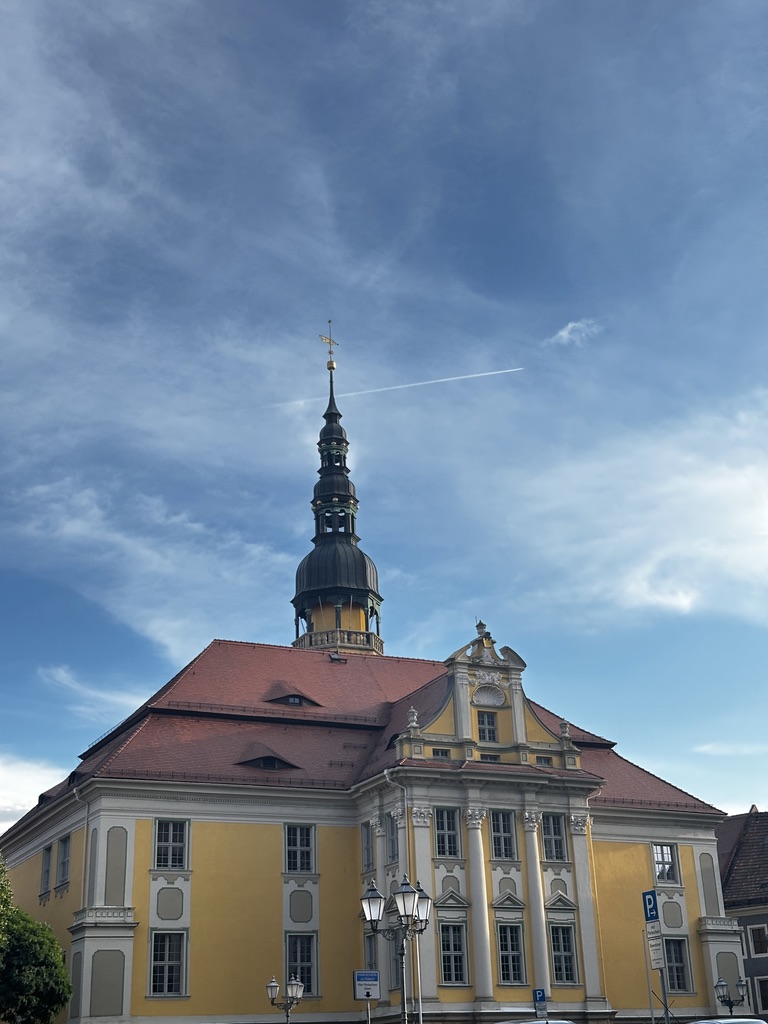
This is the Bautzen town hall again, from the backside!
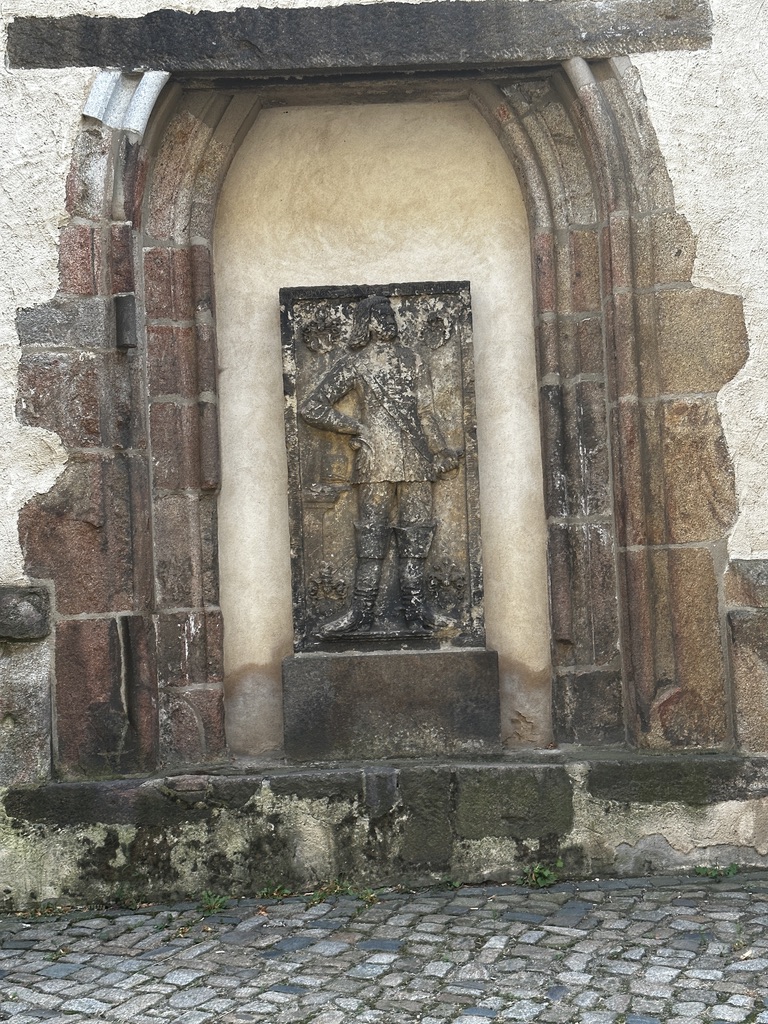
Walking around the cobblestone streets we came across what I thought was a Protestant relief, but is actually a funerary epitaph, likely to a burgher or nobleman who gave his life during the 30 Years War1, Bautzen was a hotbed of Protestantism and suffered much in the war
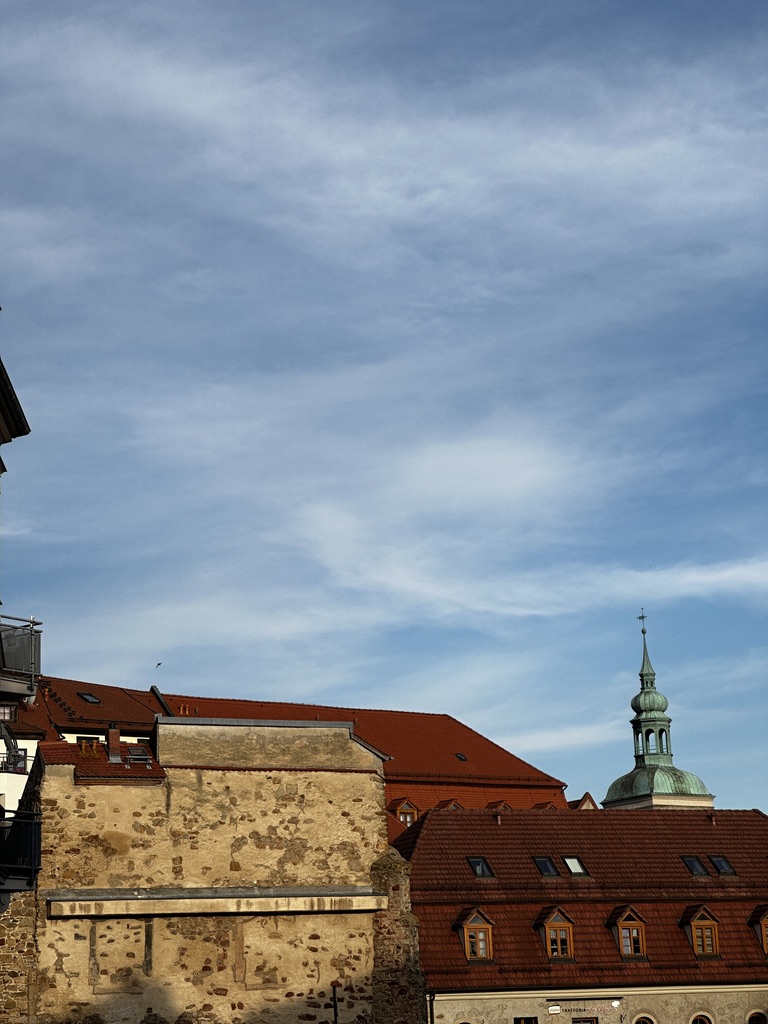
We kept making our way around the tight cobblestone streets and I found this corner to be quite beautiful, the red tipped building in the background is "Church of Our Lady" (Liebfrauenkirche) and it is the oldest church site in Bautzen, 1293!
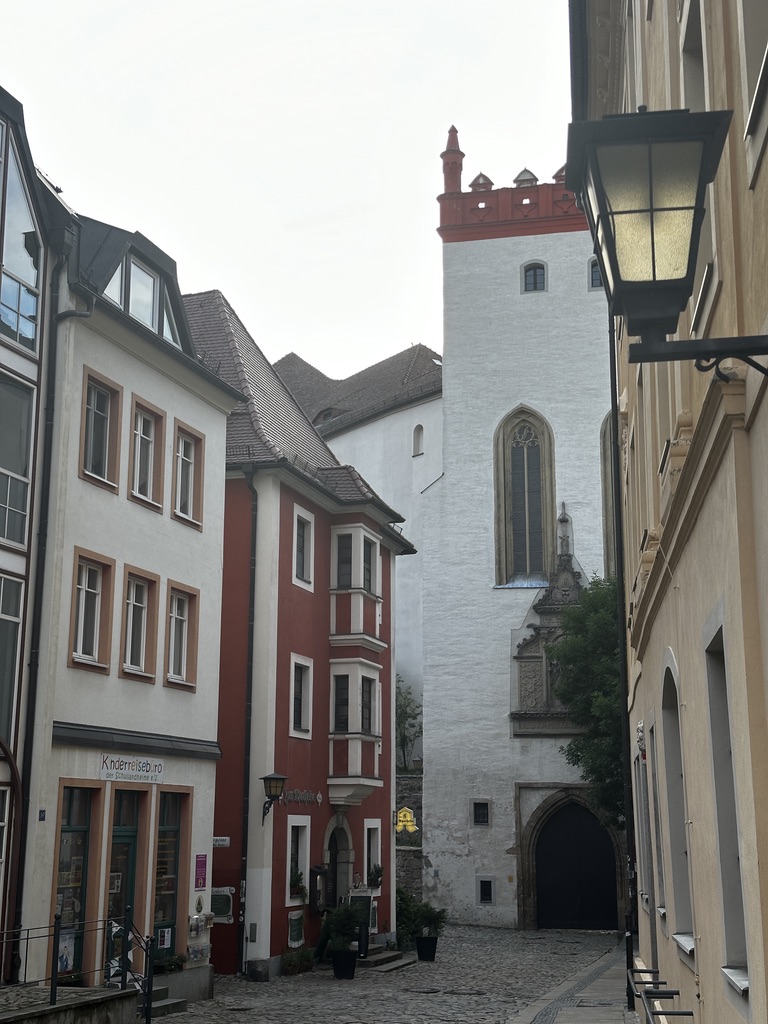
This is, notably, a Catholic church and serves the Sorbians (Wends) of the town2! According to the Sorbs themselves the site of the church is far older3 and would draw Slavic christians from hundreds of miles. The city is divided by Saxon Protestants and Catholic Sorbs4
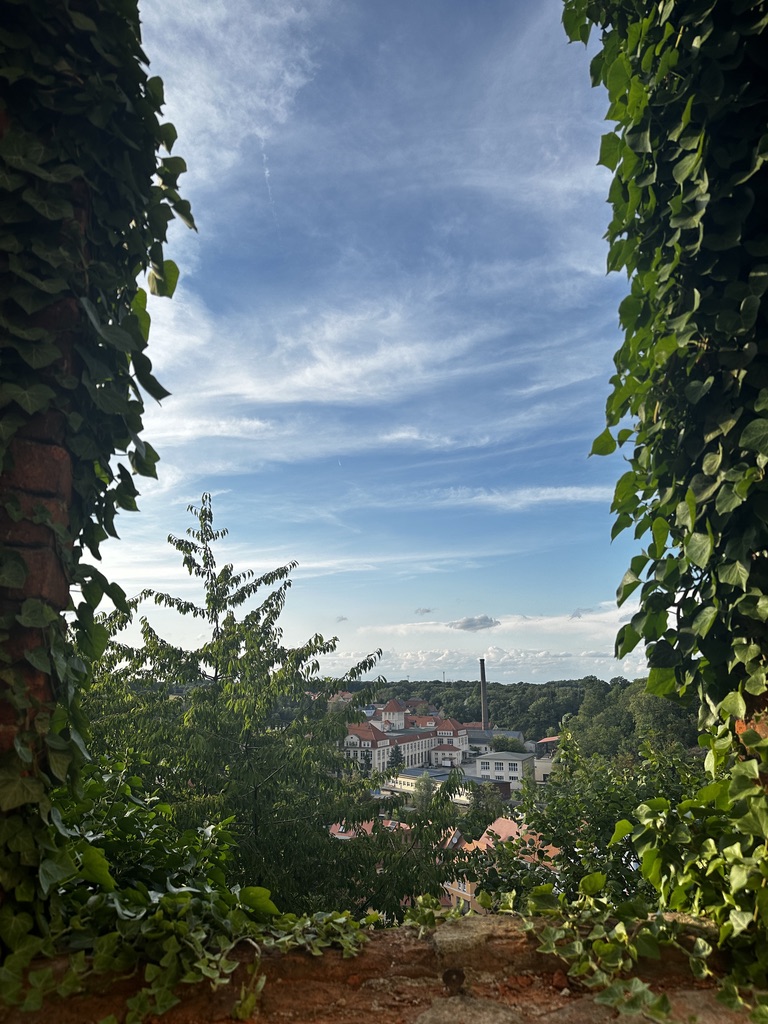
We made our way to the walls of the city and started to walk up them, I took this pretty photo overlooking the part of the town that surrounds the walls
Another picture showing off the architecture of the buildings, I was really enchanted by them
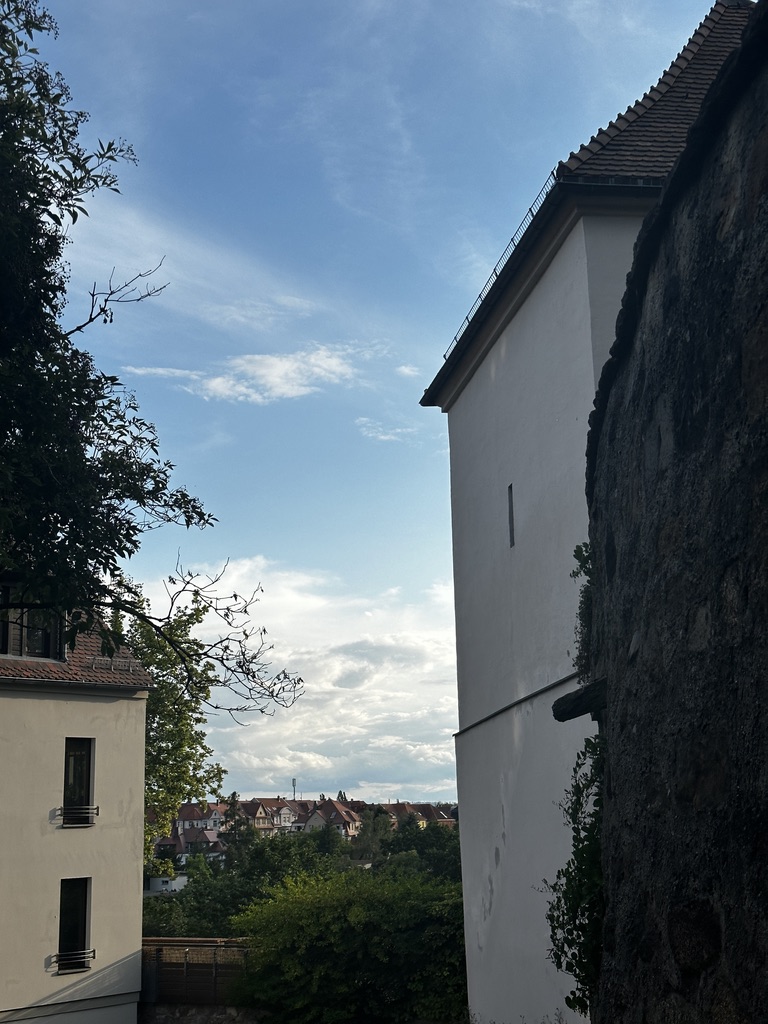
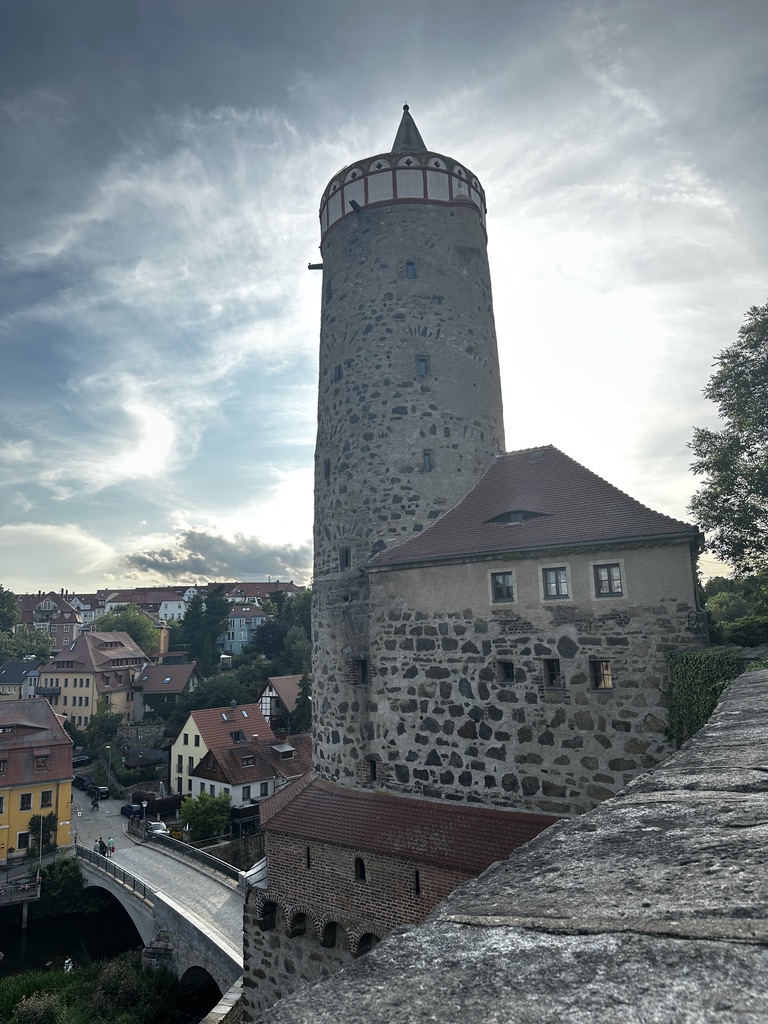
The interesting thing about this wall is that it was built originally in the 1200s but then HEAVILY upgraded due to Bautzen's involvement in the Hussite Wars5, and that is where the walls got their present form, like this picture, Hussite history!
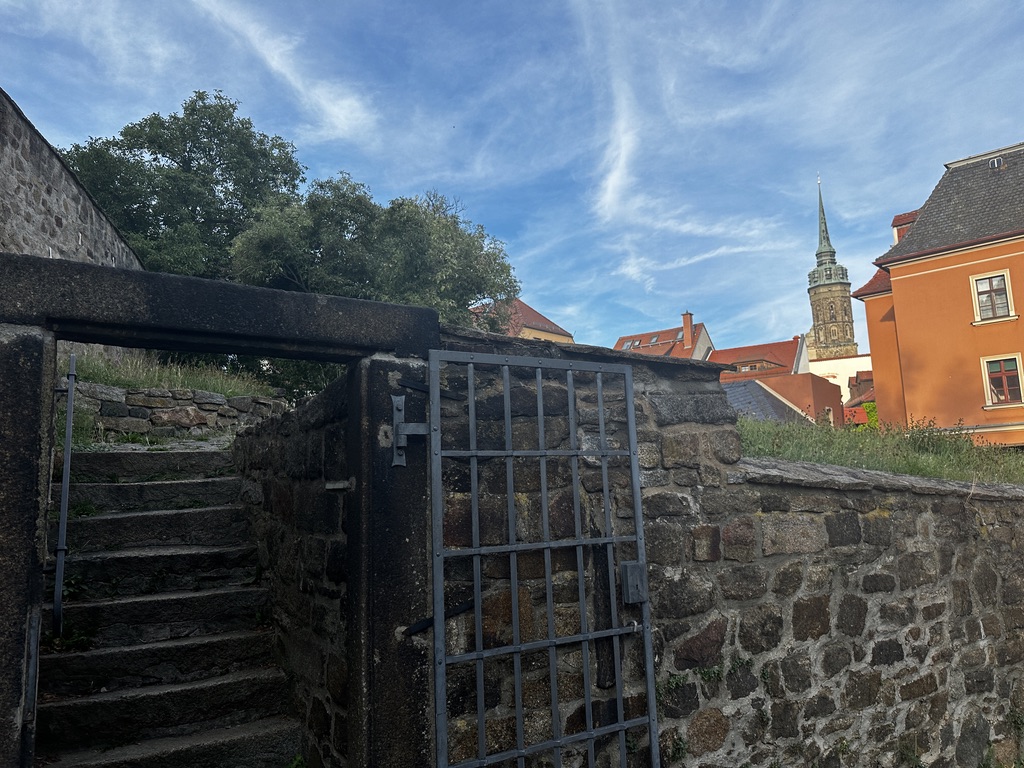
Just another quaint scene, nothing too important
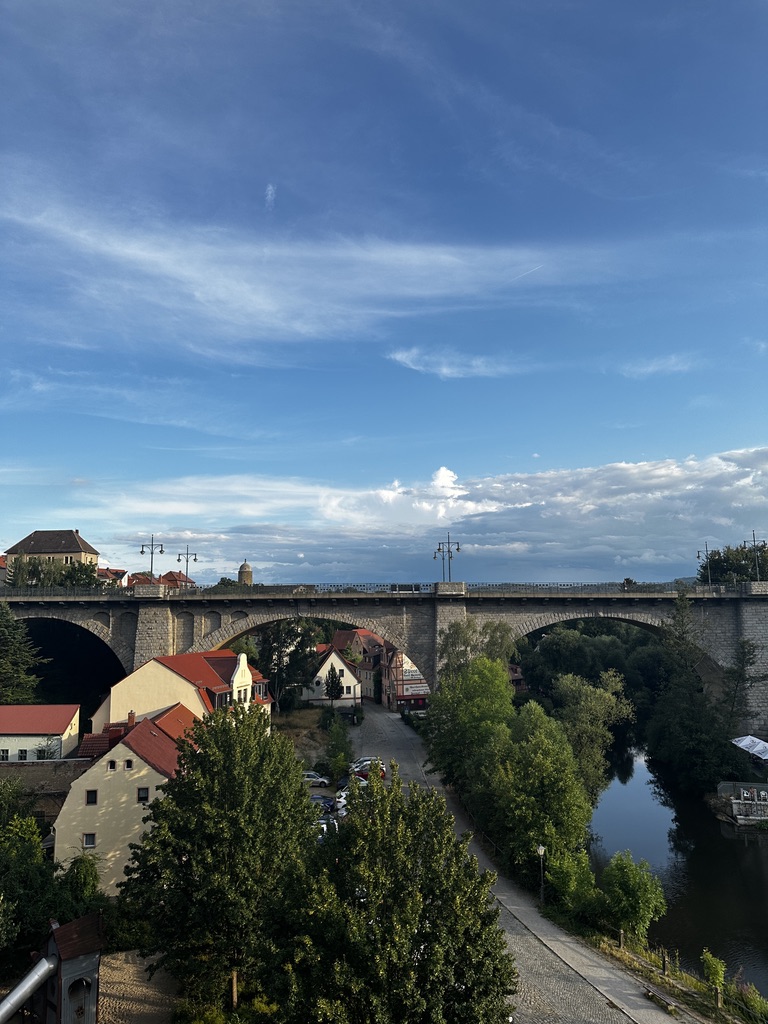
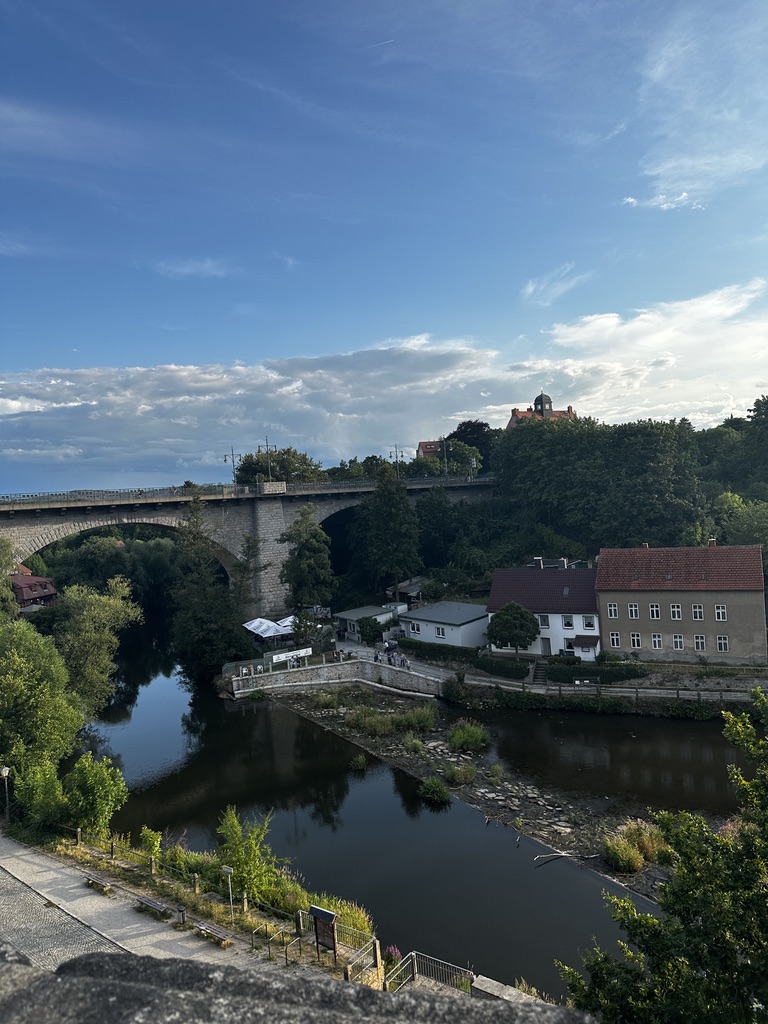
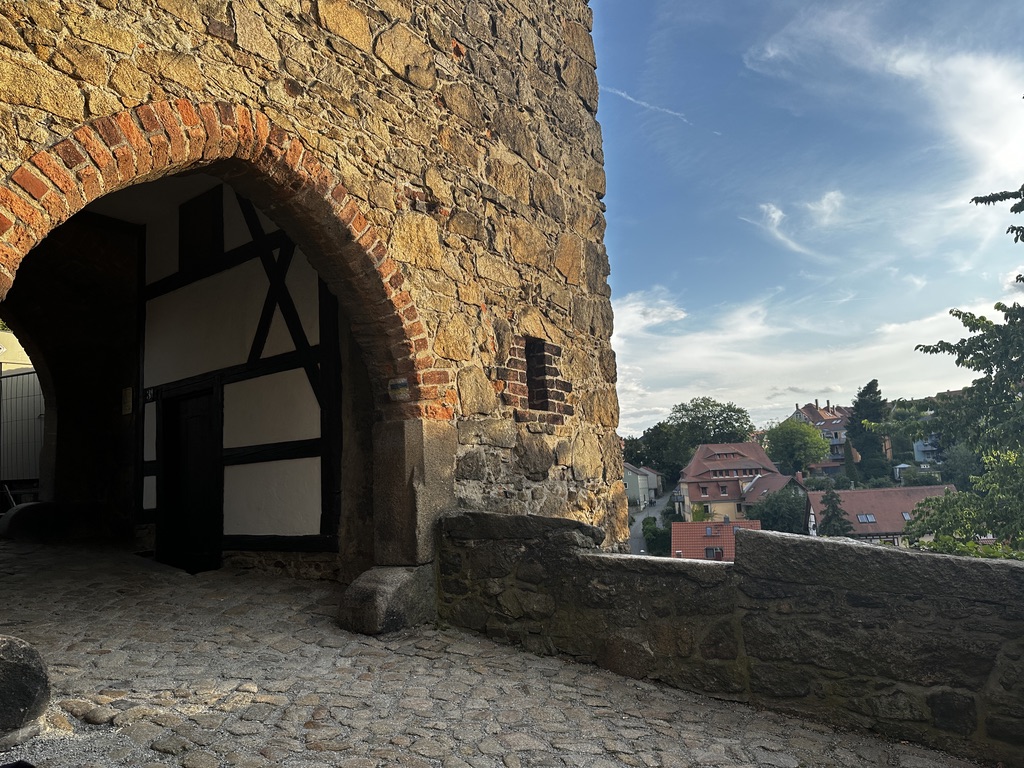
I really thought this town was beautiful and unique because of their usage of verticality... the big bridge here goes into the walled part of the city and below it rests the ungarrisoned part of town, quite lovely
More photographs from the walls of the city
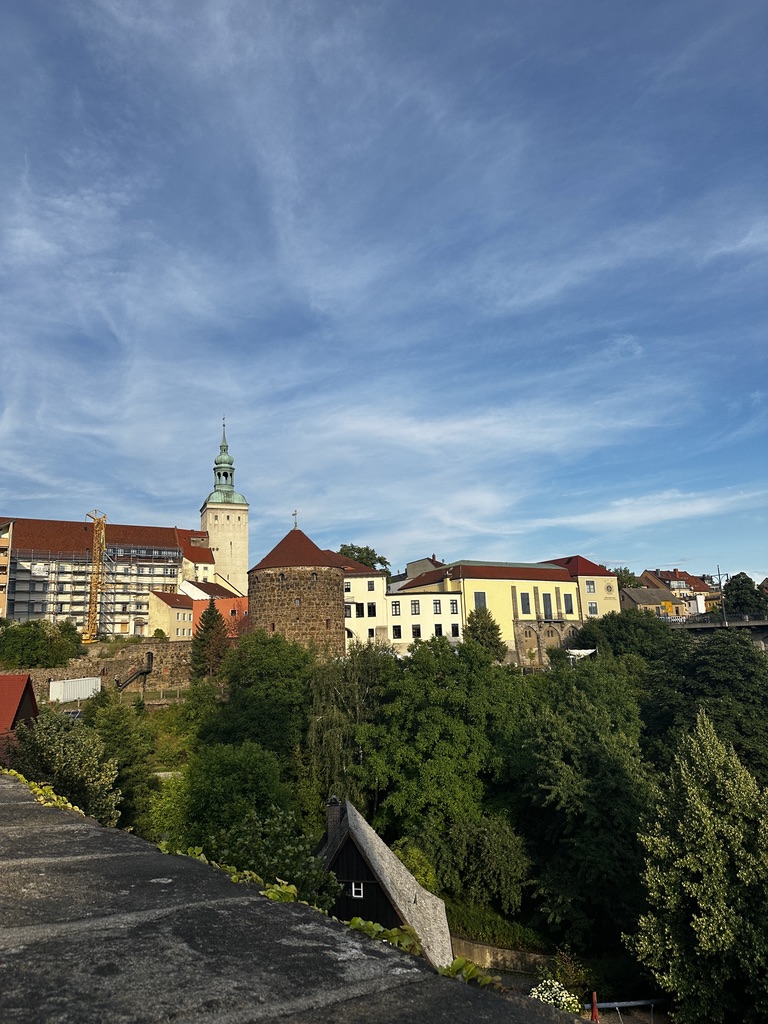
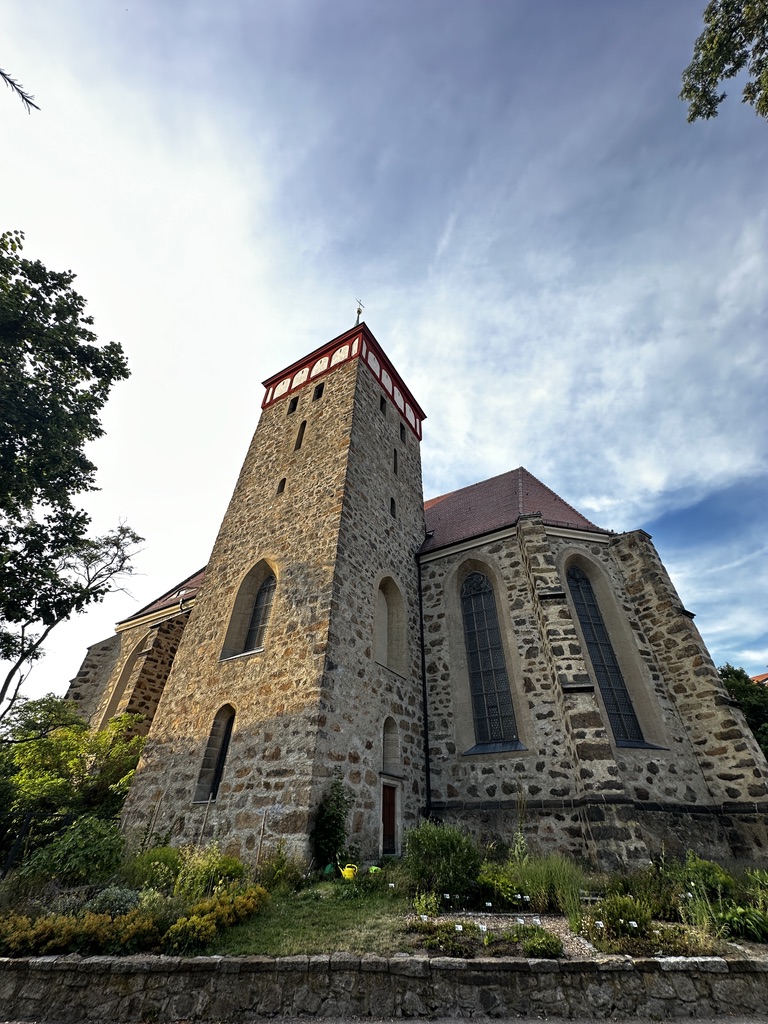
Here's another view of the Catholic Church of the Sorbians, you could feel that it is a sacred and holy place, they chose the location of their Church well!
Onward and upward we went!
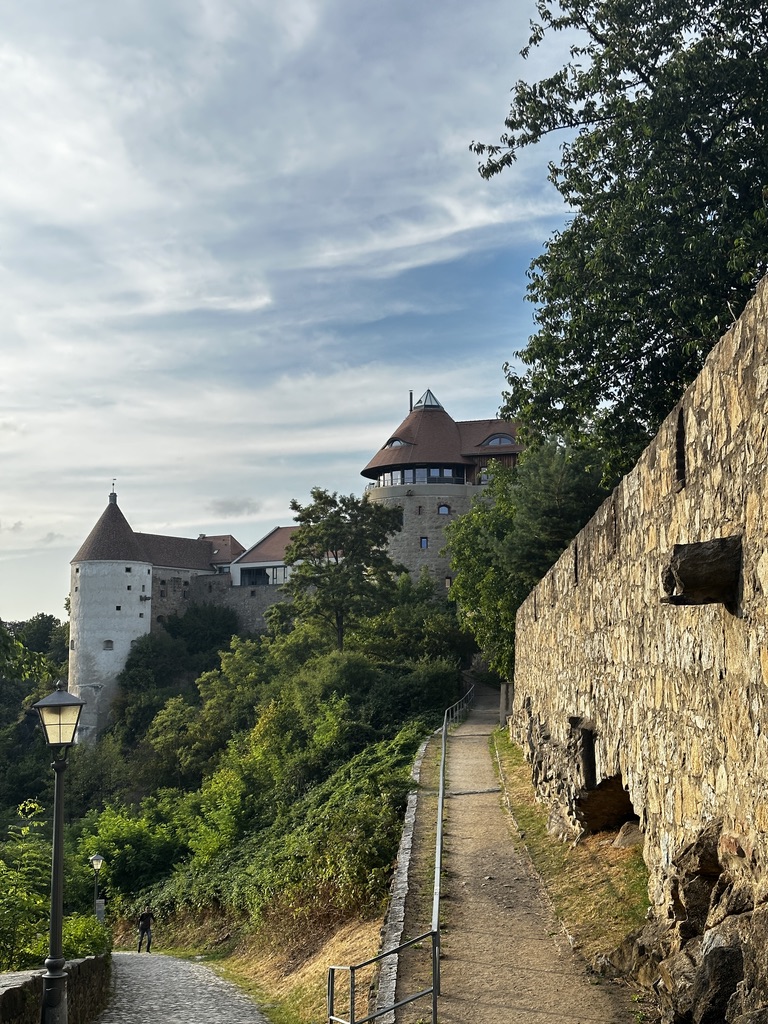
I really found this part of the wall so interesting, it clearly has at some points not been changed in over 500 years, just spectacular
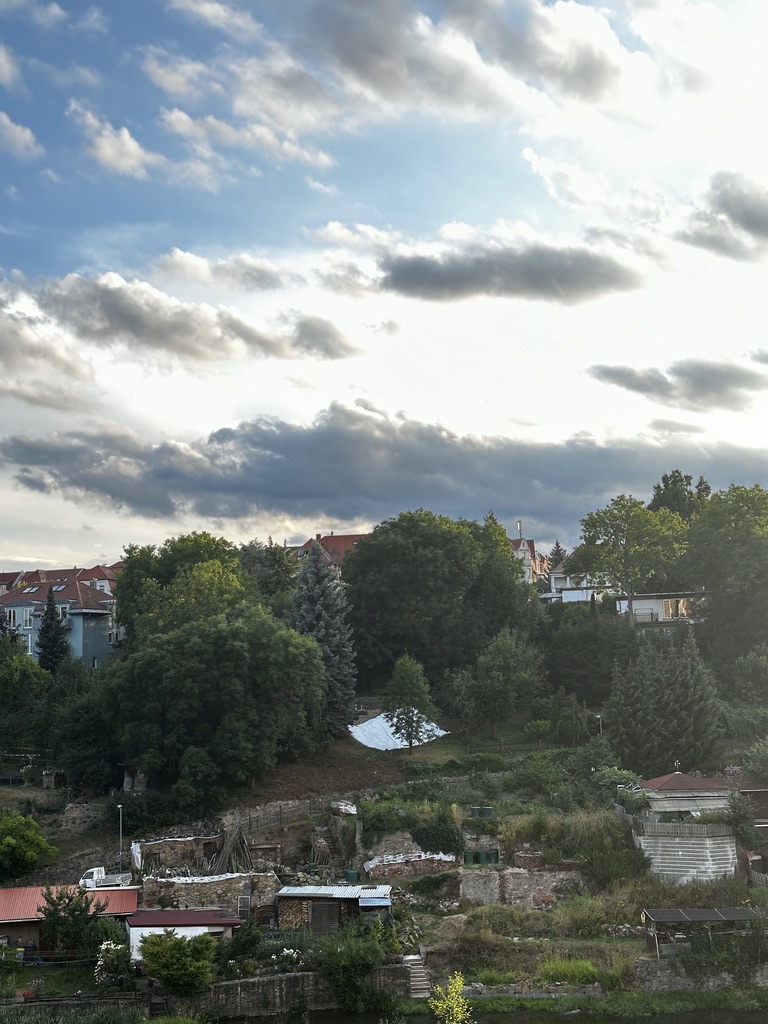
This was an interesting photo to me, I took it because it was a unique view of the lack of zoning, it just felt so quaint, the kind of thing you would never see in an American town, look at the little farm, it is just a pottage, how pretty
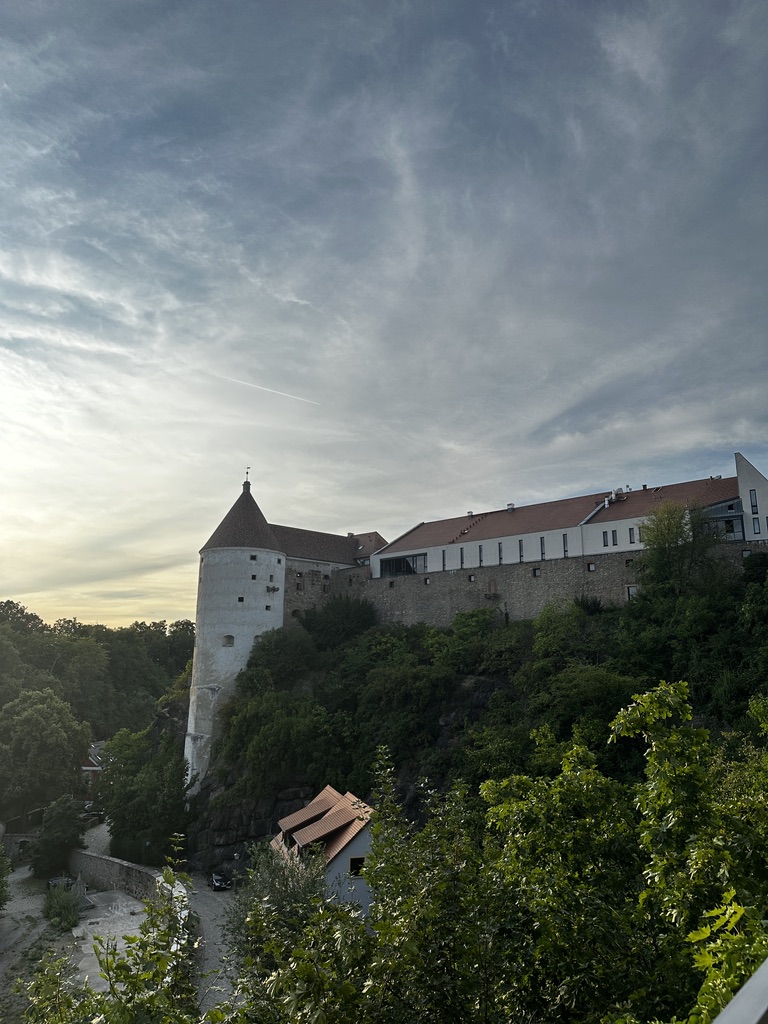
Finally we made it to the top! At this point I was having heat stroke, drunk, and (as we will later find out) having the pre-symptoms to mild sodium poisoning, but, I am a cowboy, and I persist! The alcohol has not warn off, and day is still bright!
Well, despite this, I didn't take any pictures at this point, I was single minded trying to get to my car to drive to our hotel, but I did manage to walk past a historical bookstore, and took many photographs of books for future reference, hello past me, future me says thank you
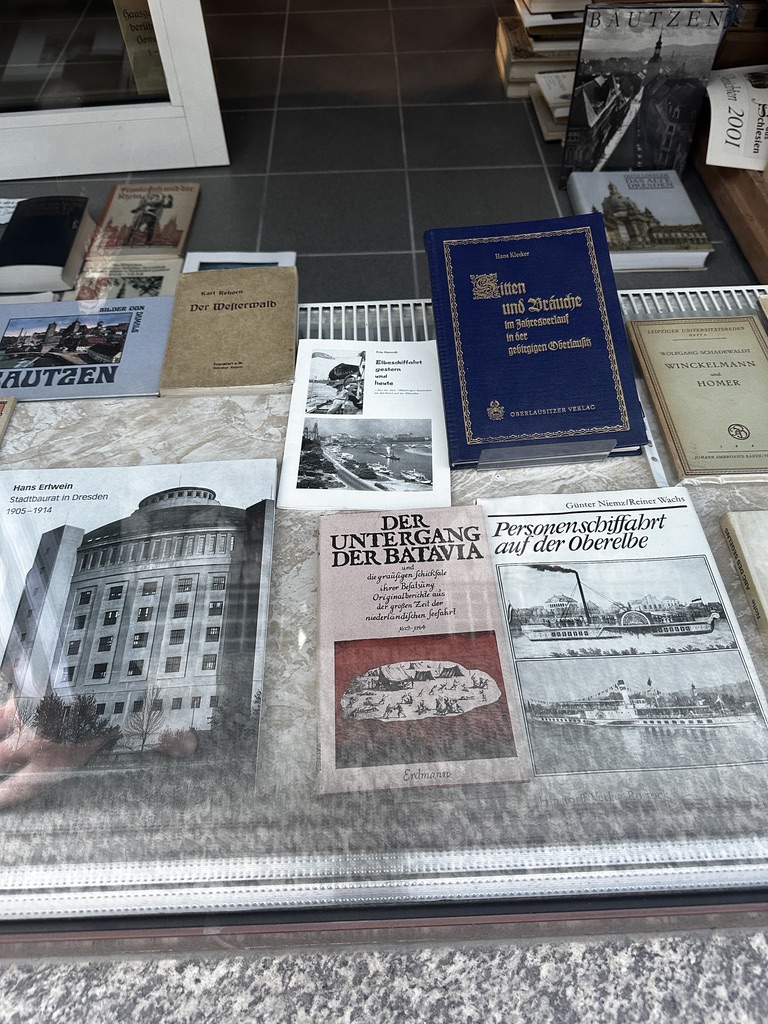
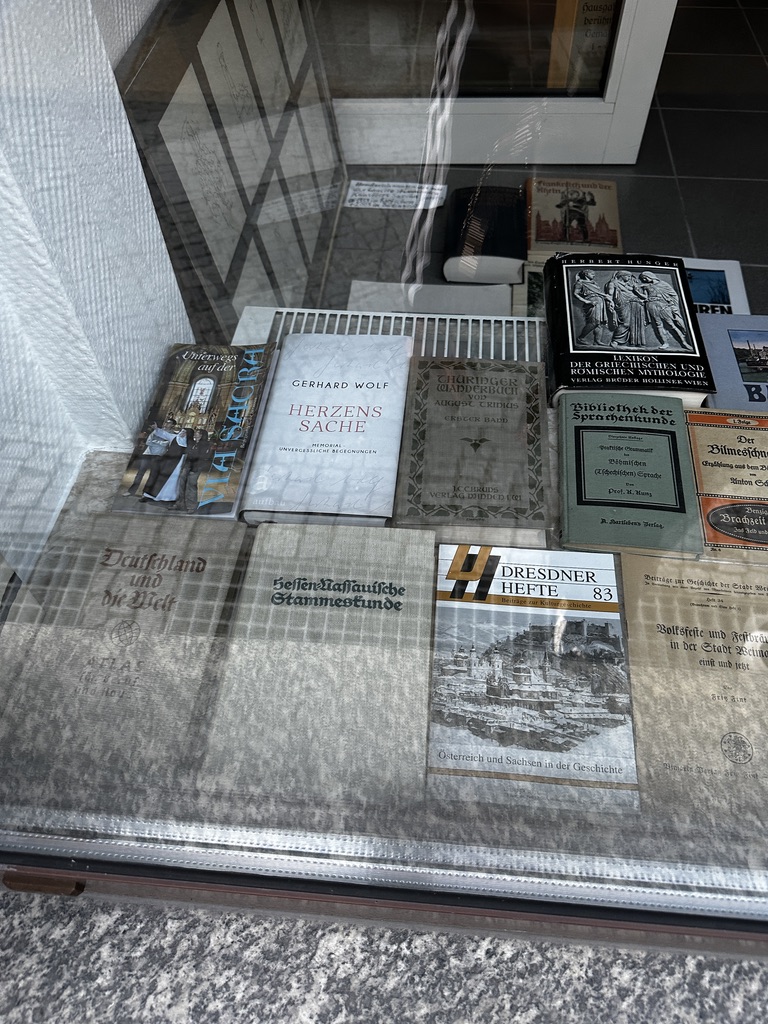
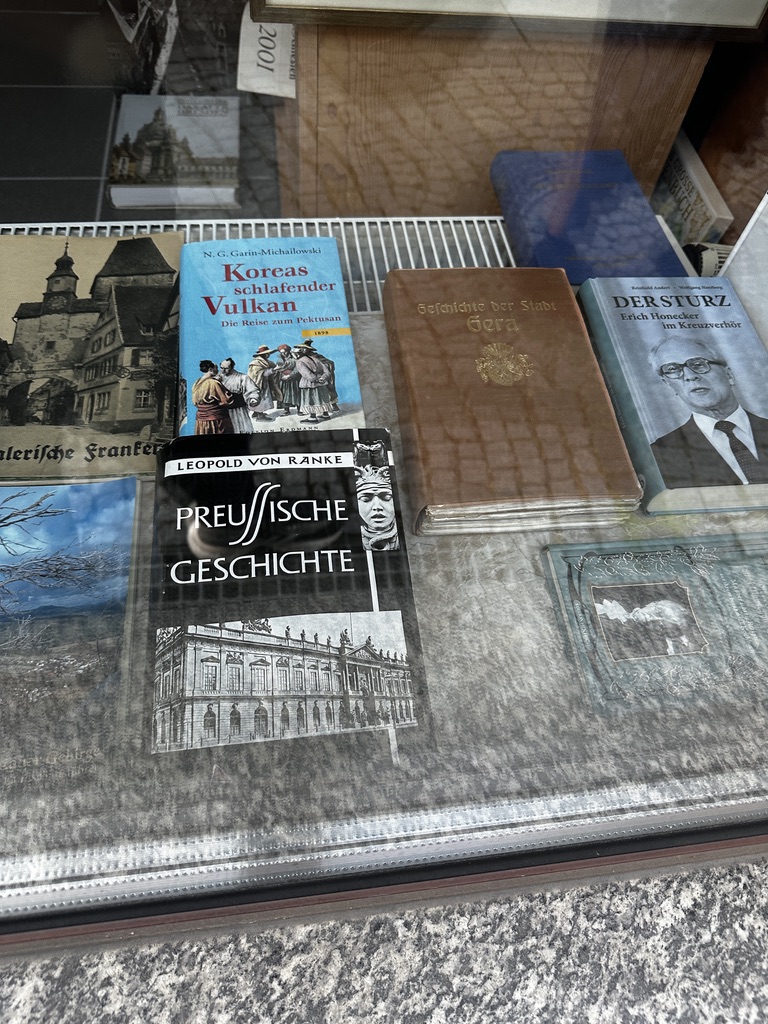
That concludes this trip! Now, you may be thinking. Well, that wasn't that interesting, I didn't learn anything about Sorbians! Neither did I! It seemed to me, and I was told this by locals, that it was basically... kitsch at this point6, everyone speaks German7!
I awoke the next morning with salt poisoning and made myself throw up and drove to Potsdam, where I would be spending my final days in Europe, and that itself is a story for another day, but also affected me deeply.
I would love to return to Sorbia one day and meet some Sorbs properly, to see their side of things, and to meet some people who speak it fluently and keep these traditions alive8. Ultimately, Bautzen left me with many thoughts about Settler-Colonialism and Communism9
I found it horrific and sad what had been done to the Sorbian people10, and found it quite depressing that the only thing to truly wipe them out was simply... modernity11, they had fought valiantly for so many centuries, keeping their culture alive, one shot by modernity!
Looking around the town you don't get the sense you're in the homeland of the Sorbs, you get the feeling you're on a military garrison built by Saxons, who built it so fortified because of their fear of the Sorbians, who they wished to annihilate, and it seems, almost have
To be indigenous to a land is such a complex thing, but many people have become Sorbians upon their own land, I think there's a lot to learn from the history of Sorbs and Saxons, and we can apply those lessons and observations to our own lives, today
One day perhaps your culture will be nothing more than a kitsch holiday destination, your form of dress a clown costume, and your dish served to the palettes of the people who colonized you, that is the march of history, a people's fire can only be quenched12 when they let it be