In July of 2023 I visited... SORBIA, a small Medieval Slavic minority Nation1 located in the uplands of Southern East Germany... and I visited their last ethnic stronghold, the town of Budyšin (Bautzen in German)2
In this thread I will recall my adventures and thoughts:
I began my Germany to the Nation of Sorbia from the Tyrolian resort town of Seefeld, a town close to my heart I could write quite a lot about of, but for another time, and I spent the whole day driving from there, along the autobahn through Muenchen and Dresden.
The Sorbian nation might sound like Serbian3, this is no mere coincidence! Folk legend has it that the ancestors of the Serbians were Sorbians who were evicted from the land during the Early Middle Ages by Germans expanding eastward, there is some evidence to back up these claims too. The people who stayed became Sorbians and they have, systematically under German rule, seen their culture shrink, but at times, have fought back valiantly and to this day, still manage to live, despite all the pressure to exterminate them and Germanify them4. The land often went back and forth, until it was finally made 'Saxon' in 16355.
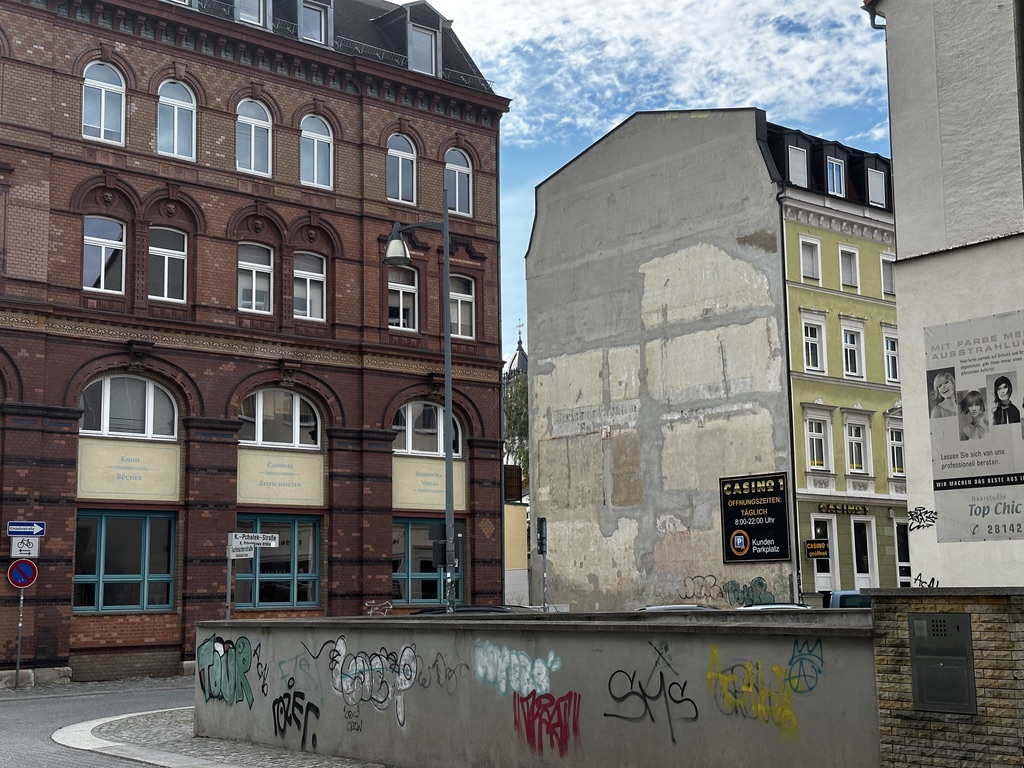
The first thing that I noticed upon entering Eastern Germany was the decay, it reminded me a lot of my home, the Great Lakes, and I saw the familiar signs of post-industrial decay one might see in Kalamazoo, Lansing, Detroit, or Cincinnati. Something that was completely foreign to me however was the mark of Communism6. This was the first former Communist country I've ever set foot in, and the stench was palpable, commie blocks, random soviet murals that for whatever reason haven't been destroyed but heavily defaced (perhaps they like it that way?). I also noticed AFD signs everywhere, and one of the small towns I drove through was having a rally! They smiled at me but glared at my Indian lady friend, but we kept on driving.
Upon arriving after driving for about 12 hours my lady friend and I searched for some for some grub, we found an Indian-Italian fusion place (???) and my Brahmin lady friend had a wonderful time talking to the random Indian man who was working there, even made sure to make it Indian spicy, instead of German (or rather, Sorbian) spicy. The food was okay, strange, perhaps the best Italian food I ever had, because as an American I love fusion foods, and Indian-Italian is quite tasty!
We arrived late at night, and had to check ourselves in, which was an easy enough process. Our hotel was nice, acceptable, with an AC, ate our Italian-Indian food, and headed to bed...
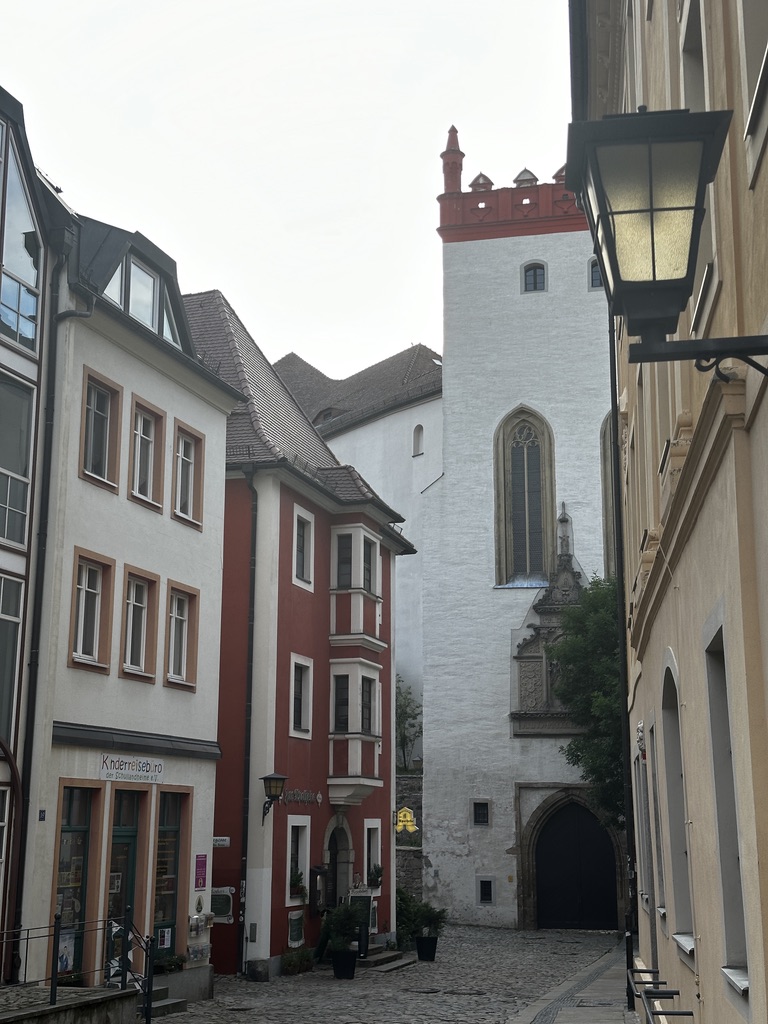
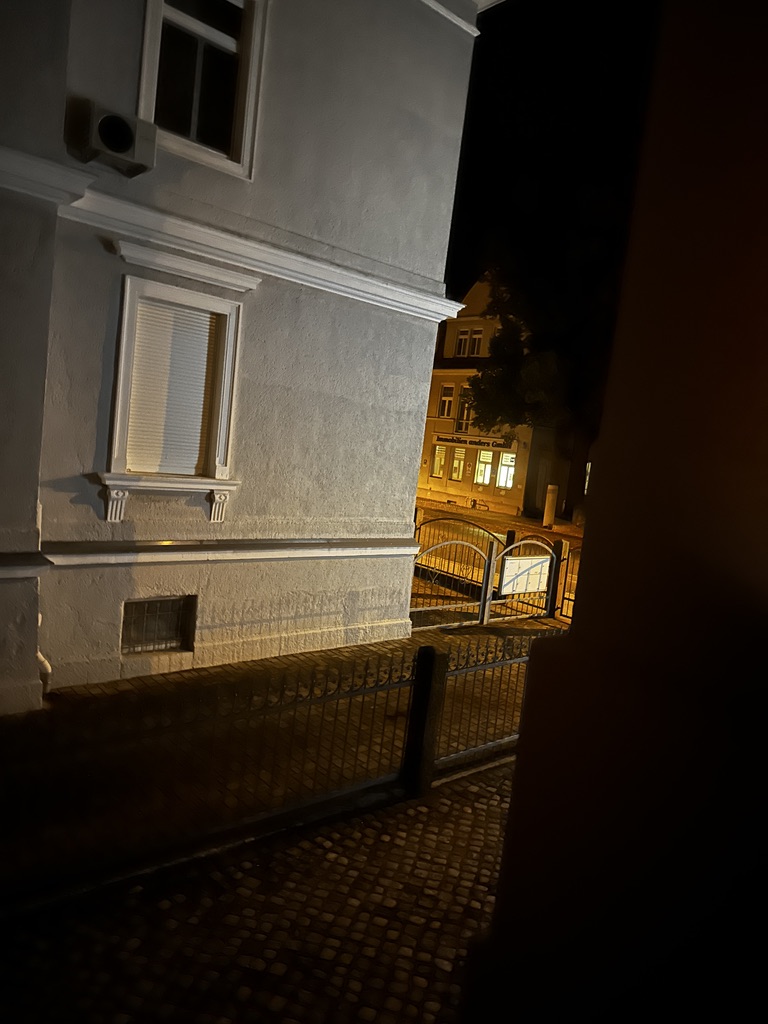
I was quite tired when I took this picture, but this was the view from my hotel at night, it felt quite quaint, and I was trying to admire the architecture. The architecture of the buildings is something that you really notice, and I found it incredibly charming.
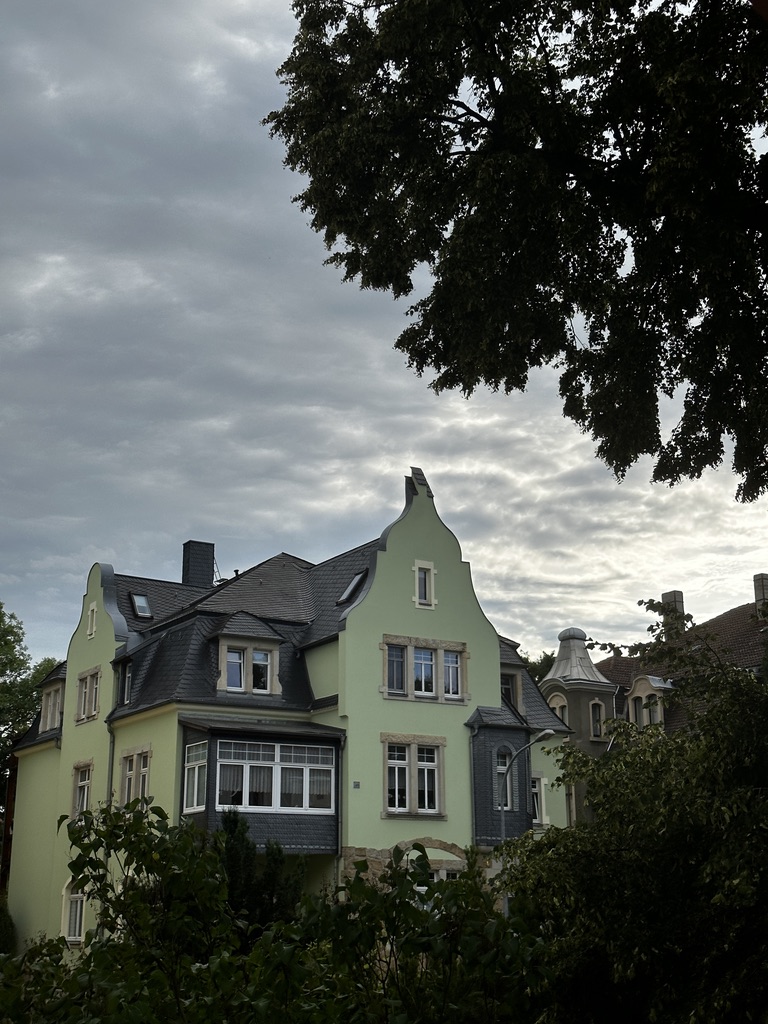
We arose the next day and I had this view outside of the hotel room, just beautiful architecture. Never seen anything like it in my life! Lovely paint of green too, on both buildings!
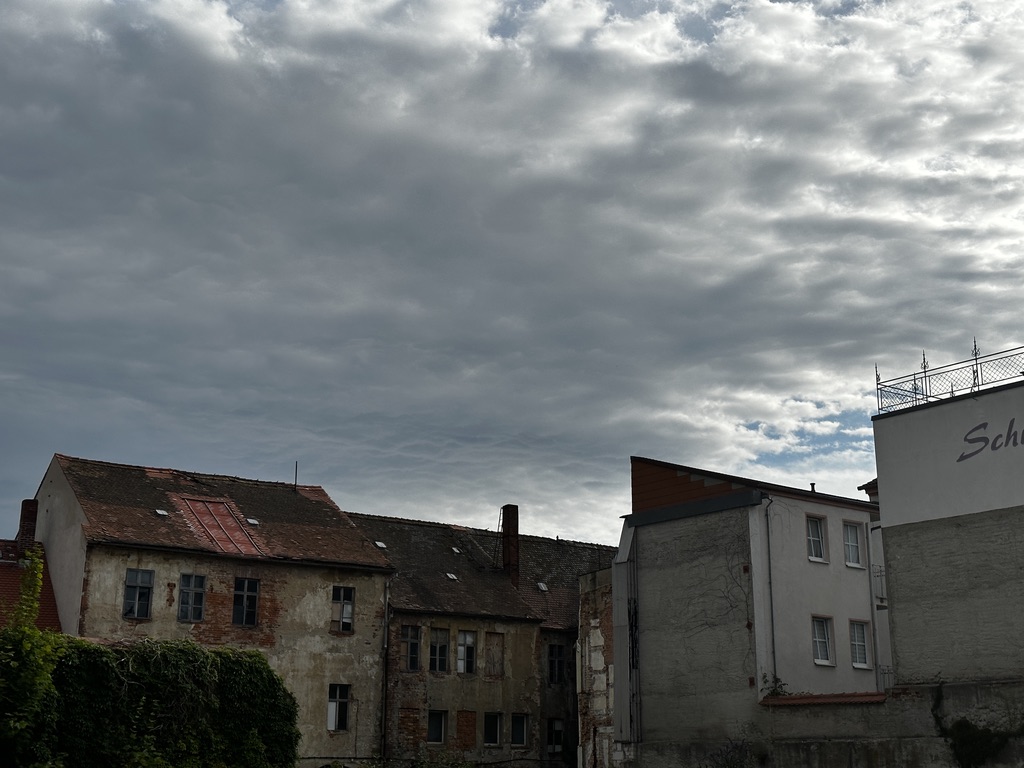
I took my car and drove downtown and parked... in the center of town. And so we set off and decided to tramp around all day, and tramp around we did! This was the first picture I took of the downtown because it reminded me of the Rust Belt here in America
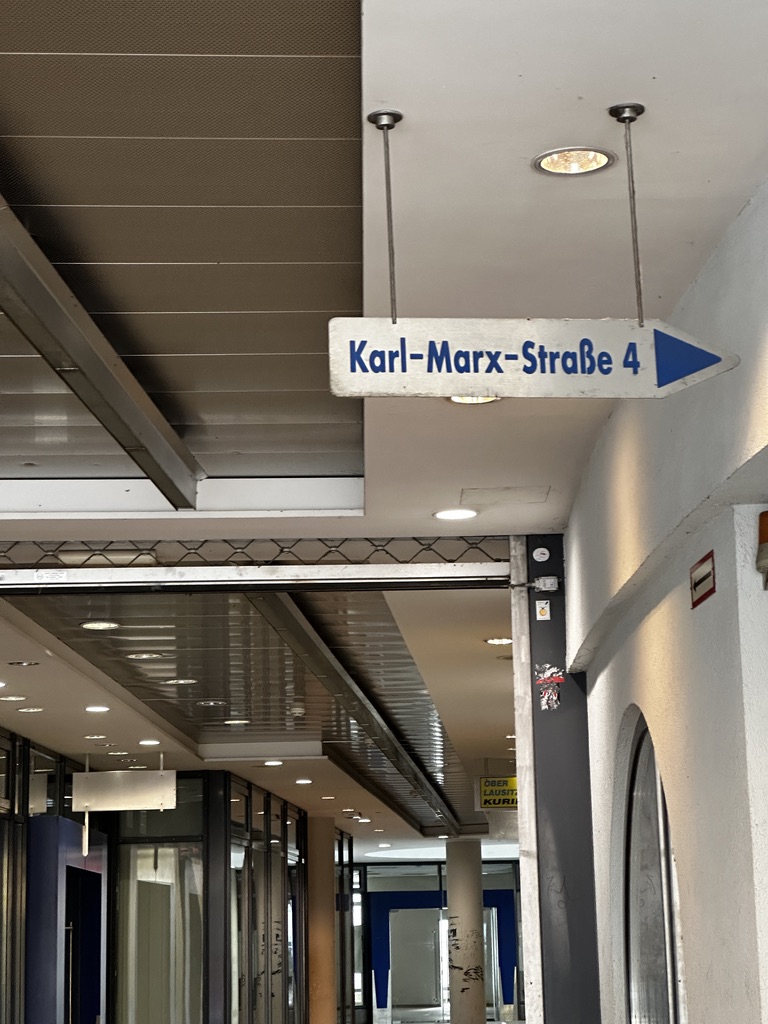
We wandered into a mall that seemingly had nothing open but was still 'open to the public' and I got my first direct flashbang with Communism, a sign pointing to a street called 'Karl Marx'
The mall itself was almost completely abandoned, with nobody in it
As we walked around more I began to see the Post-Industrial decay, and it felt so charming, like home but with a different texture pack
We kept walking around and started to get to the 'German' part of town, why 'German' well it had statues of Germans all over! A mark of the ancient German Settler-Colonialism7 enacted upon the region;
"To King Albert of Saxony, from grateful Bautzen."
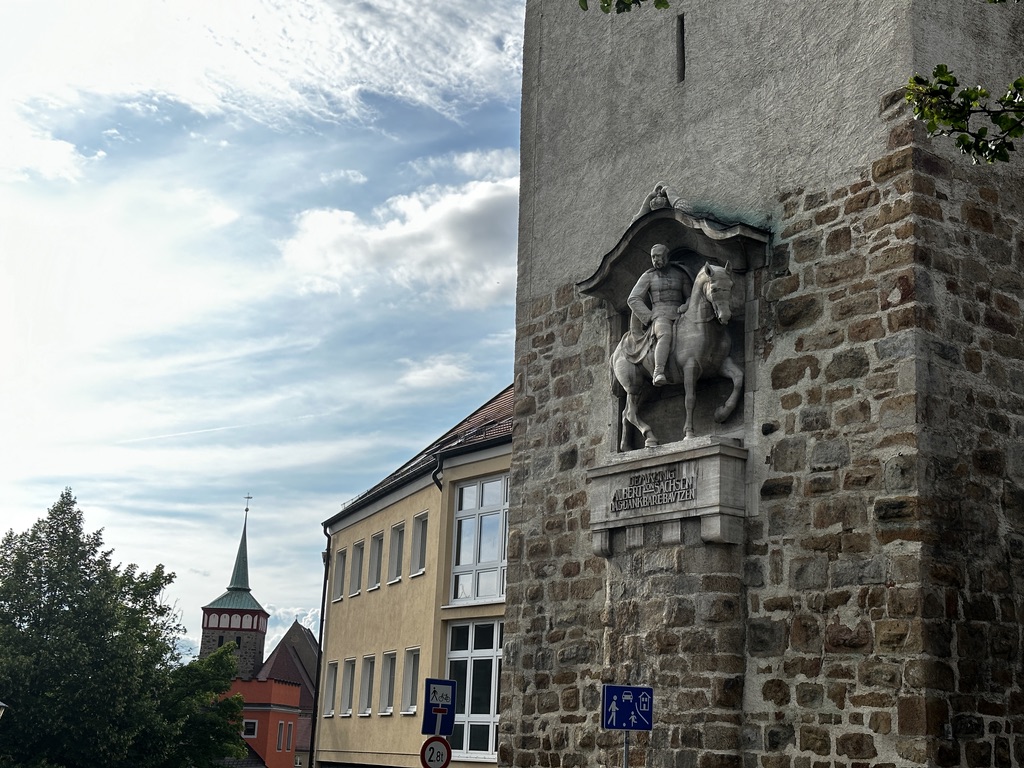
Bautzen has a complicated history, on one hand it is the last remaining refuge and essentially the capital of the Sorbian people8, on the other hand the Sorbians are not -really- an urbane people9 historically, and the town itself is a military outpost made by the Saxon kings!
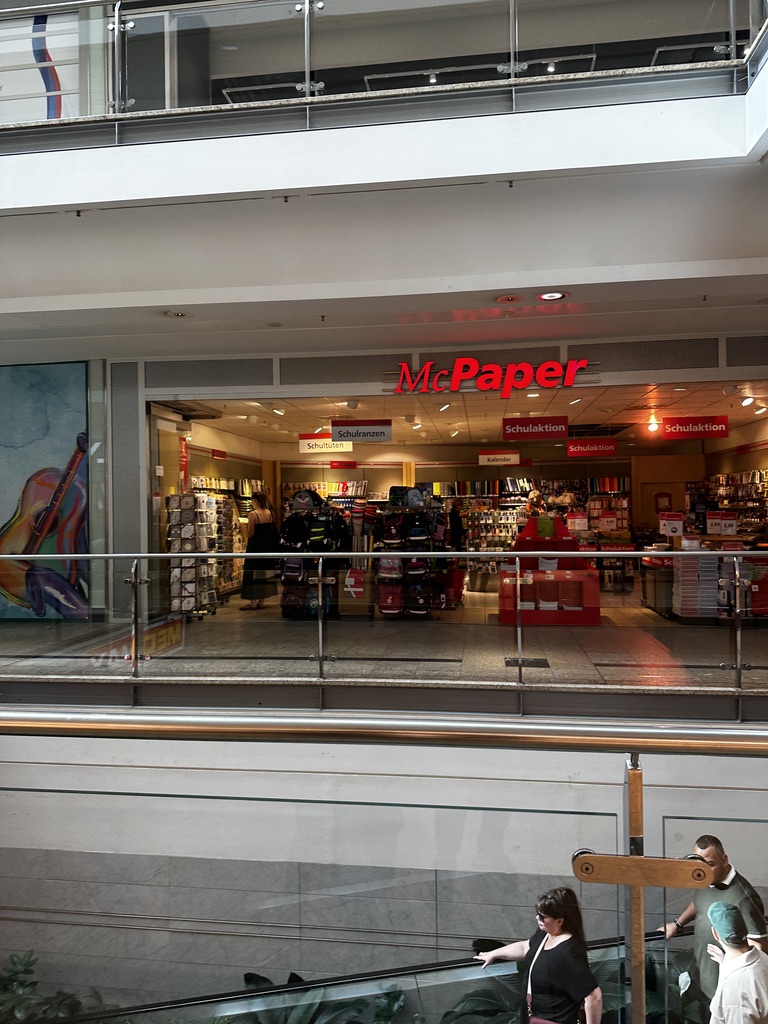
My ladyfriend and I wanted to go an actual mall, it was nothing special, just your average European mall. This specific store was funny enough of note to snap a picture of, McPaper, I kept muttering under my breath this entire trip "1000 year American empire"
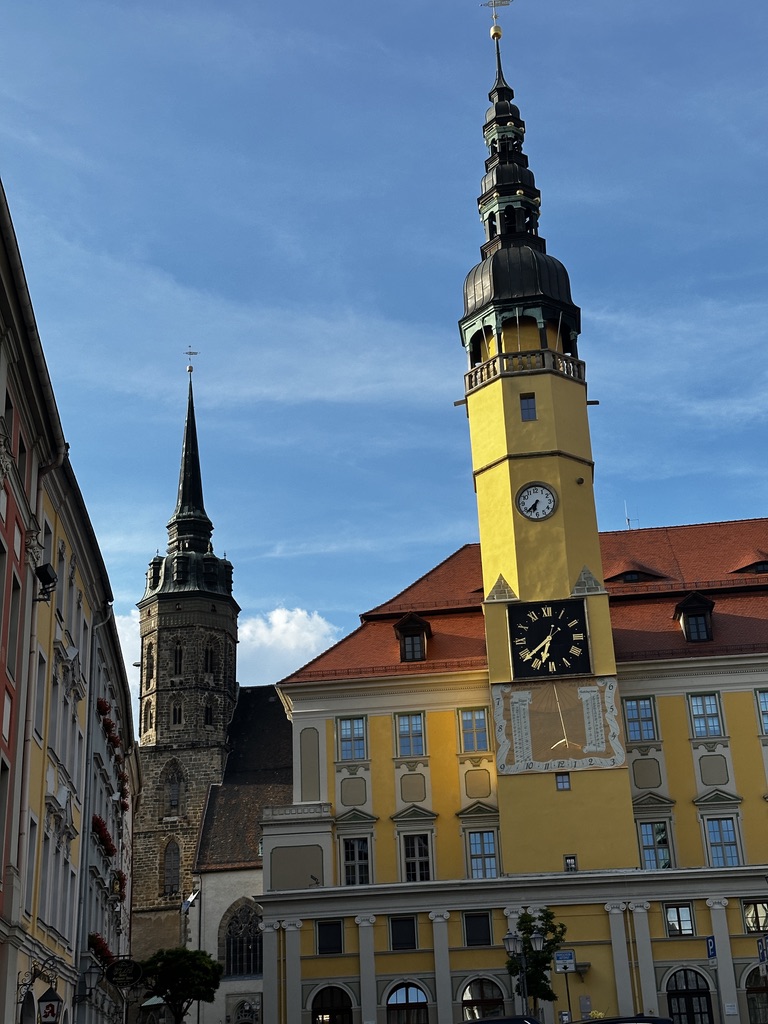
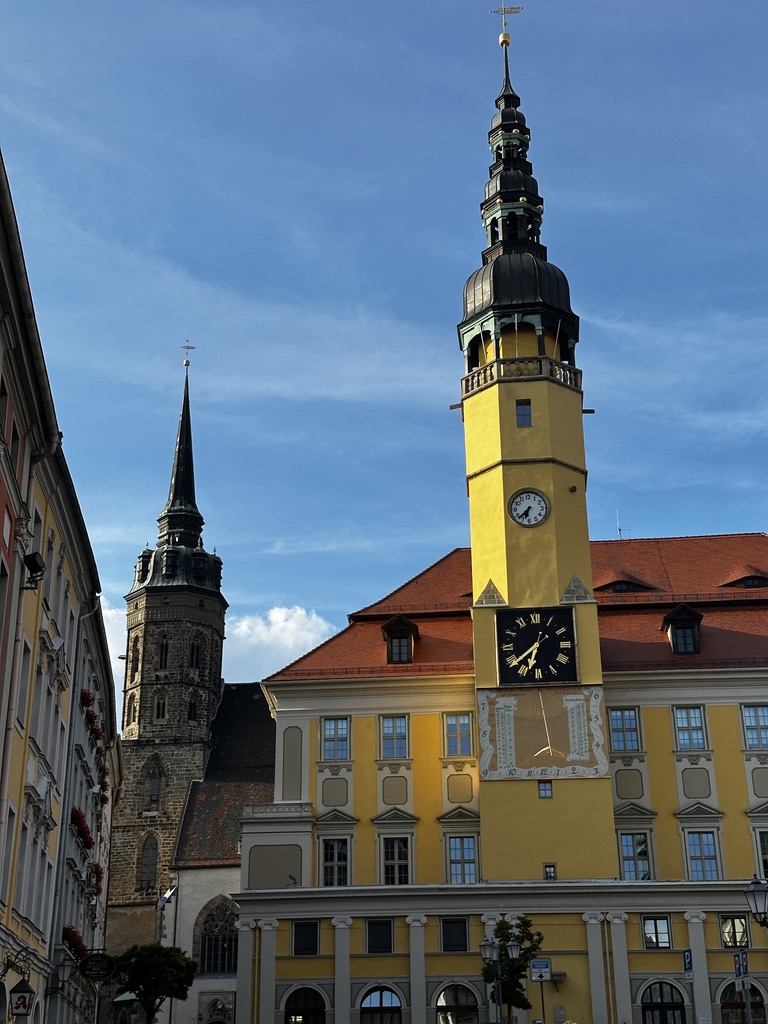
Finally we figured out where the 'main city' was and we made our way to the commons, we were greeted by this BEUATY of architecture, which is the Bautzen Town Hall10, which has been standing since the 1730s!
The building to the left is the Cathedral of St. Peter, a shared church since 1524
I spent a lot of time just admiring the statues and architecture
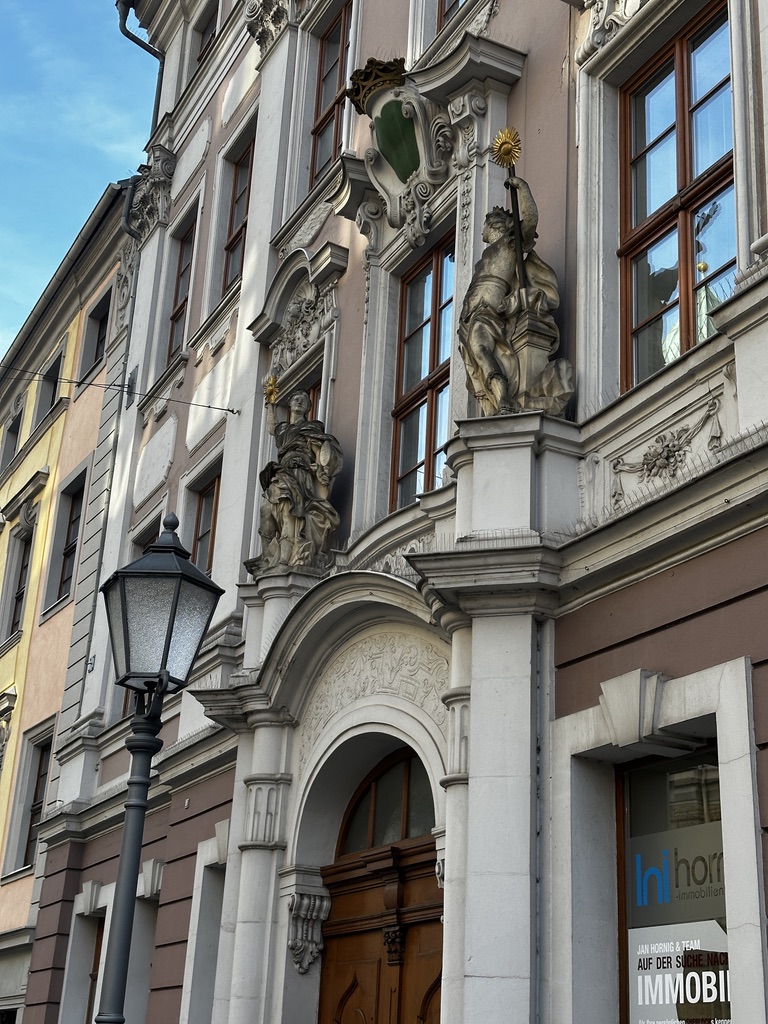
These are baroque patrician townhouses, and the statues represent two forms of Truth, Earthly Truth and Divine Truth. It is called the 'Jahreshaus' which means 'Year House' because it has 365 windows
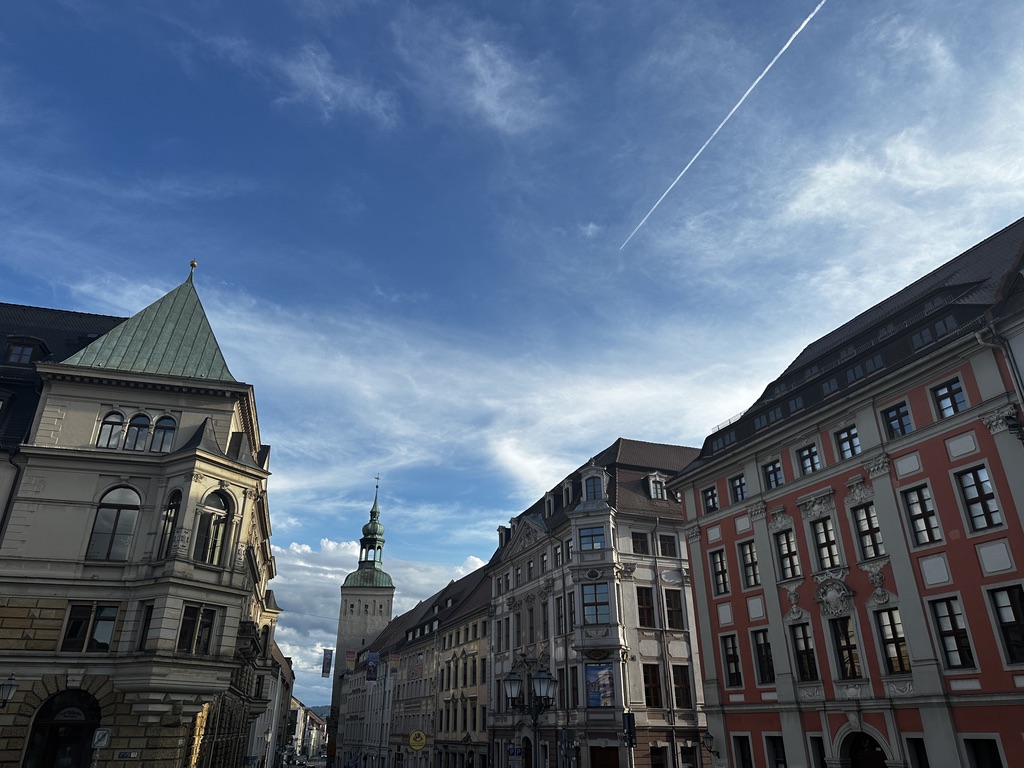
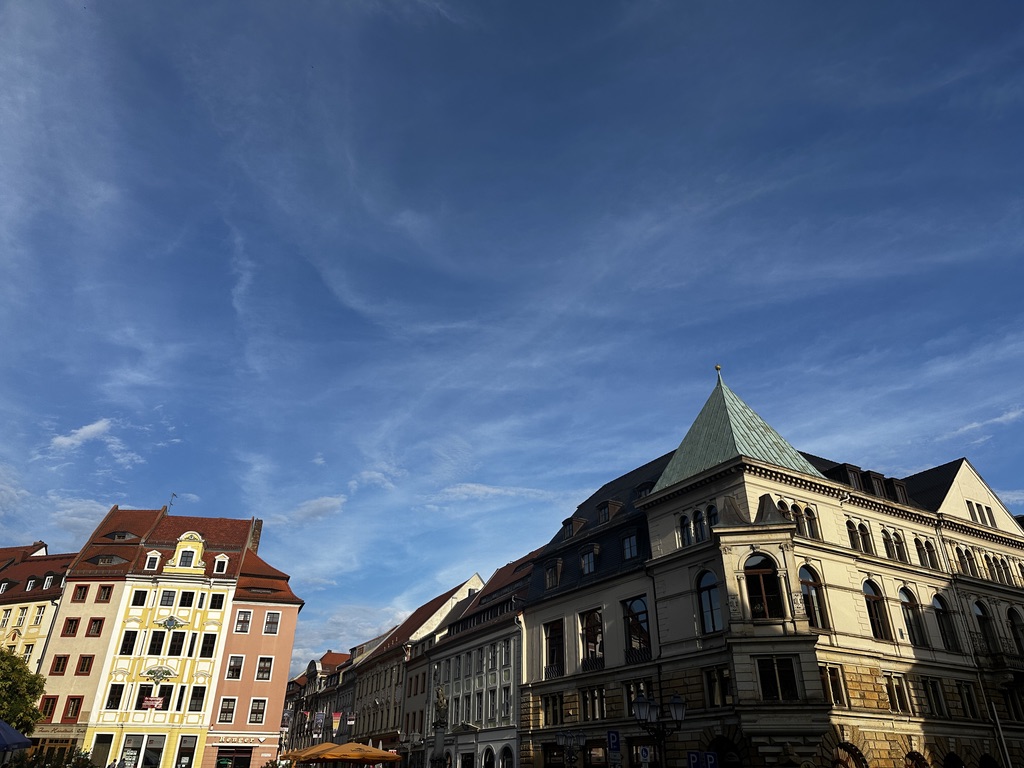
Here's another picture of the facades of a bunch of buildings, I was really just admiring the whole street, I took this picture from the middle of the commons, just truly wonderful architecture
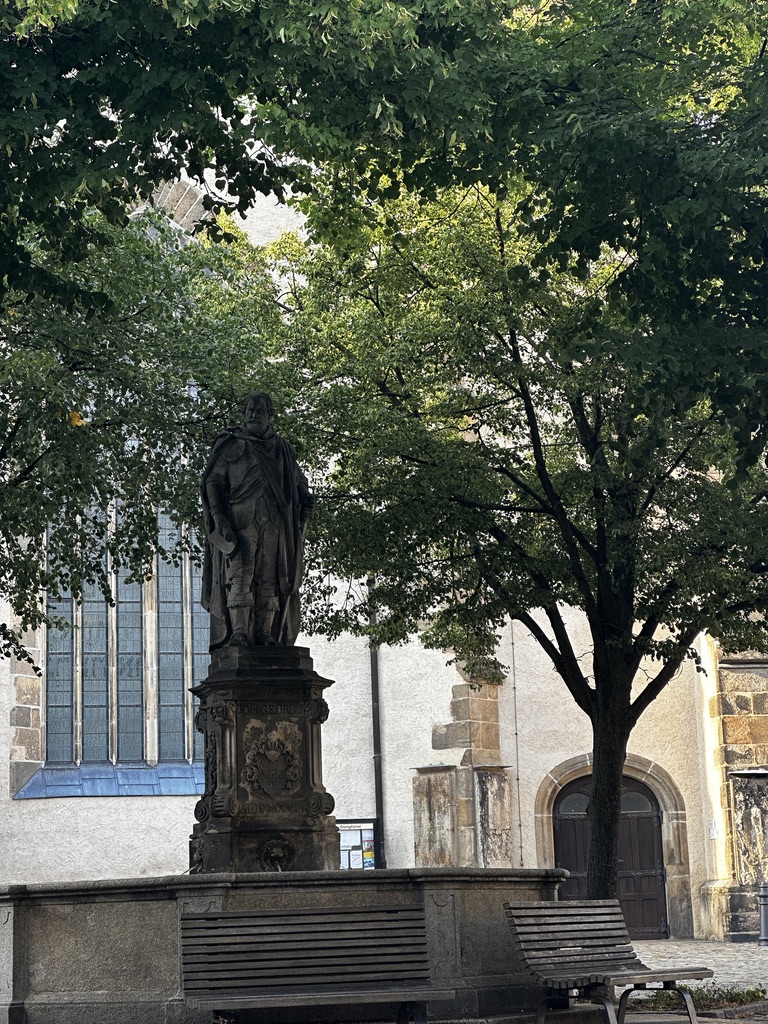
This is a statue of Elector Johann George I of Saxony, under the 1635 Peace of Prague11, Bautzen passed from the Bohemian Crown to Saxony, and Johann was the elector who acquired it, he is the man who 'Made Bautzen Saxon' he was known for being a huntsman and a cheerful drunk
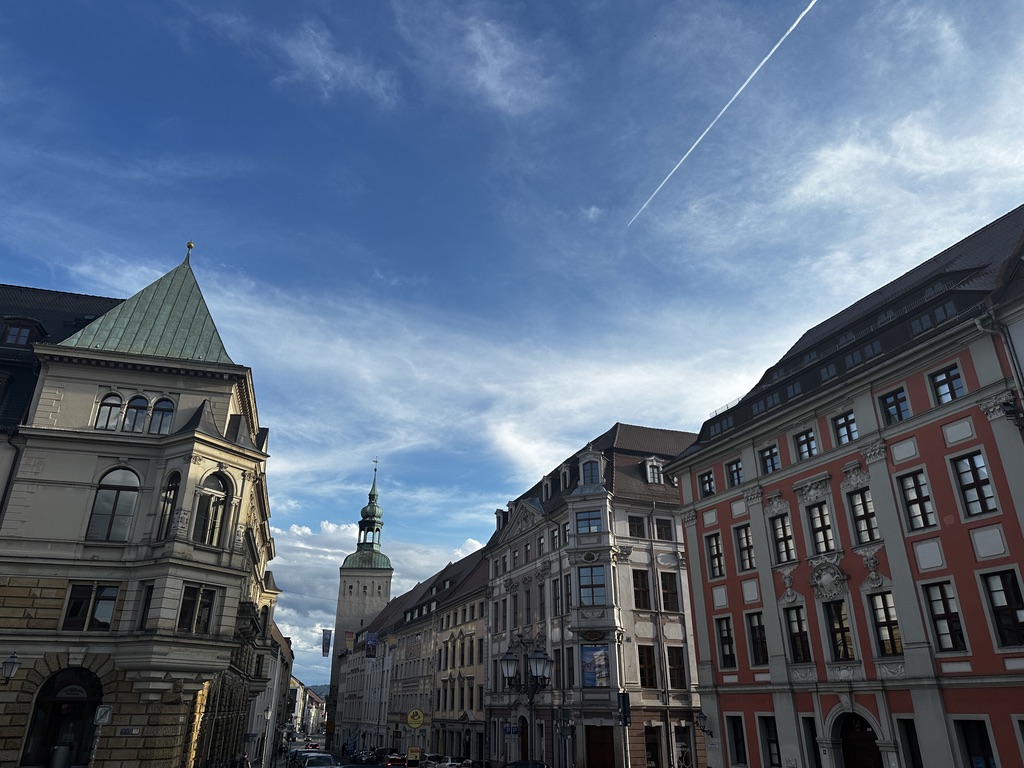
Another beautiful image of the market street, just truly lovely architecture.
This statue is not a deity, though he may look it, he's a knight from one of Bautzen's folk legends known as 'Ritter Dutschmann'12, legend has it he was a Wendish prince and daring rider who leapt over the market fountain on his stallion and vanished into the fountain
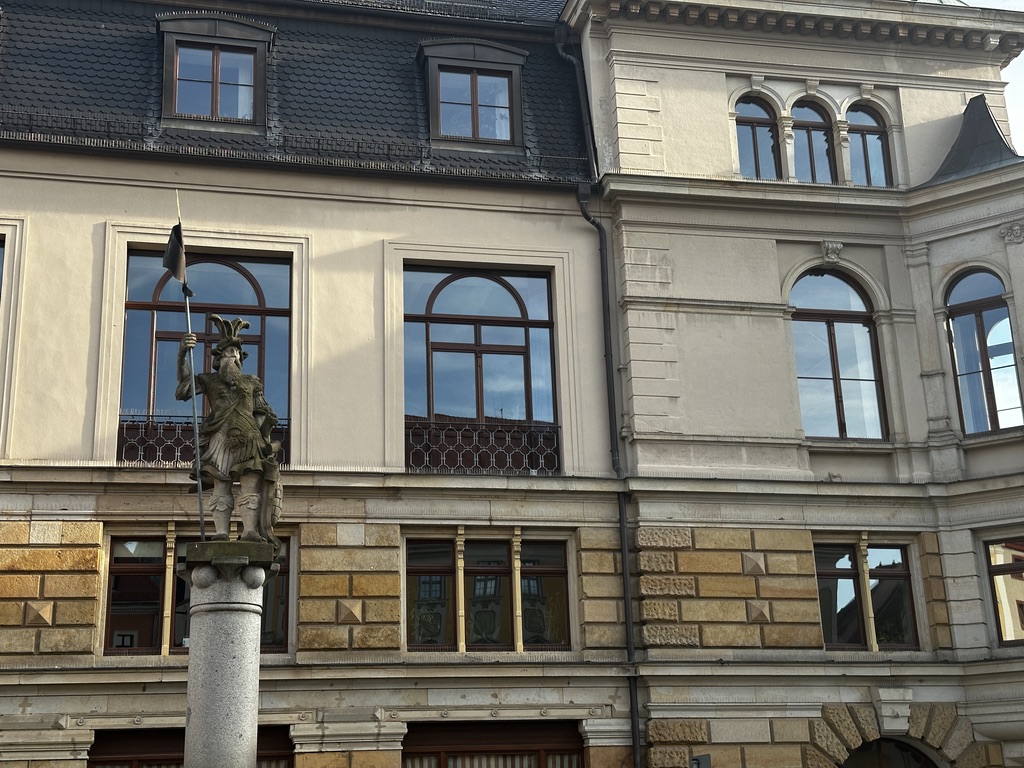
This figure is their, or perhaps the Sorbs, Roland, the symbol of the old people of Bautzen13, their rights, and freedoms, and is one of the first examples of something non-Germanic we've seen thus far
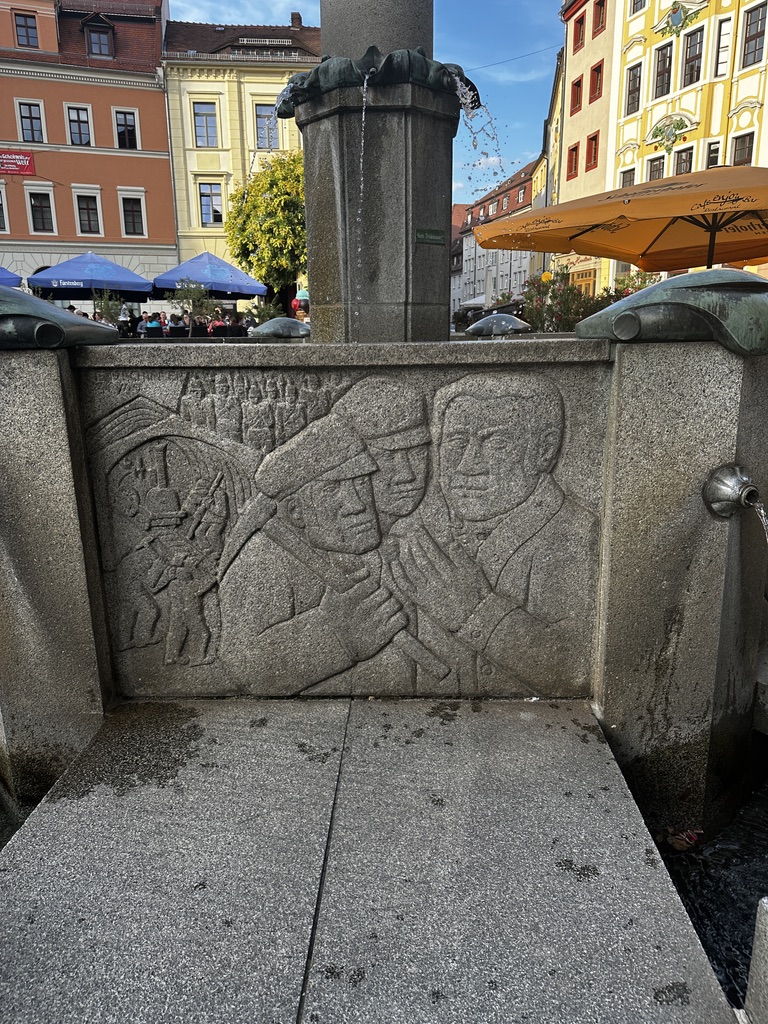
You know that fountain we talked about in the center of the market that Ritter into? This is it! And it has some marks of Communism on it, these murals made in 198514 depict scene from Bautzen's history
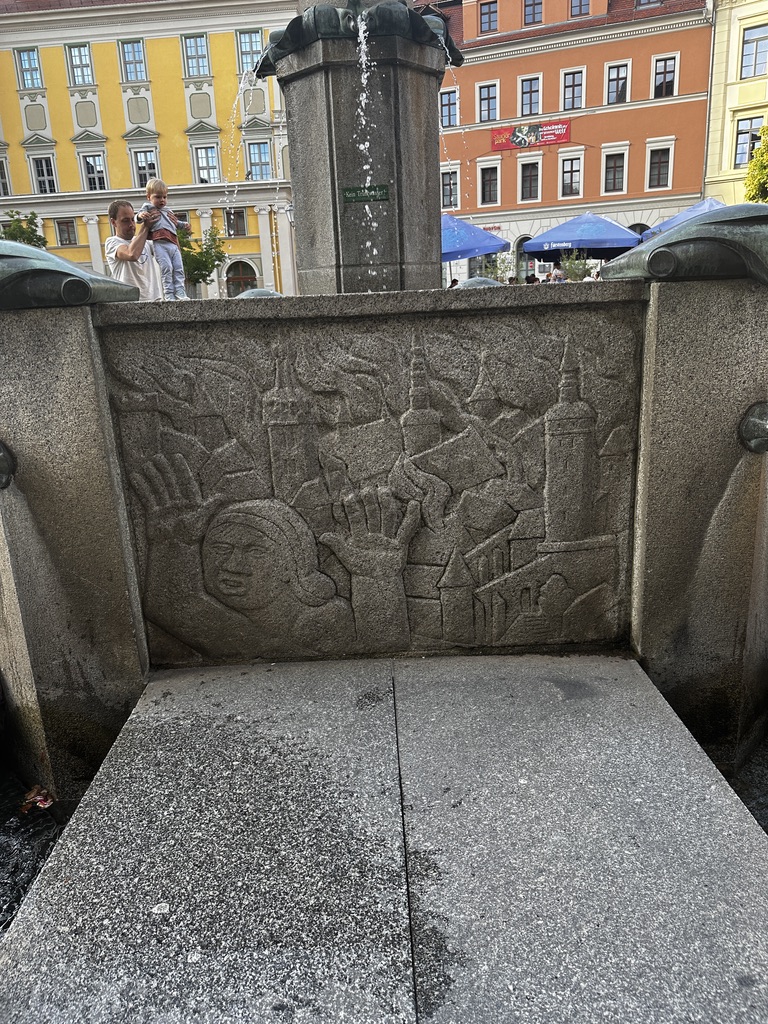
The first scene is the great city fire of 163415, where much of the city was completely destroyed
The second relief depicts the 1408 suppression of the craftmen's uprising by Bohemian King Wenceslas, all of the leaders of this were executed
Sadly I didn't take pics of the rest
More pictures admiring the seemingly ancient architecture juxtaposed with modern things like satellite receivers, yellow is an extremely common color in this town, and red roofs. The cobblestone tower in the background is part of the city's ramparts
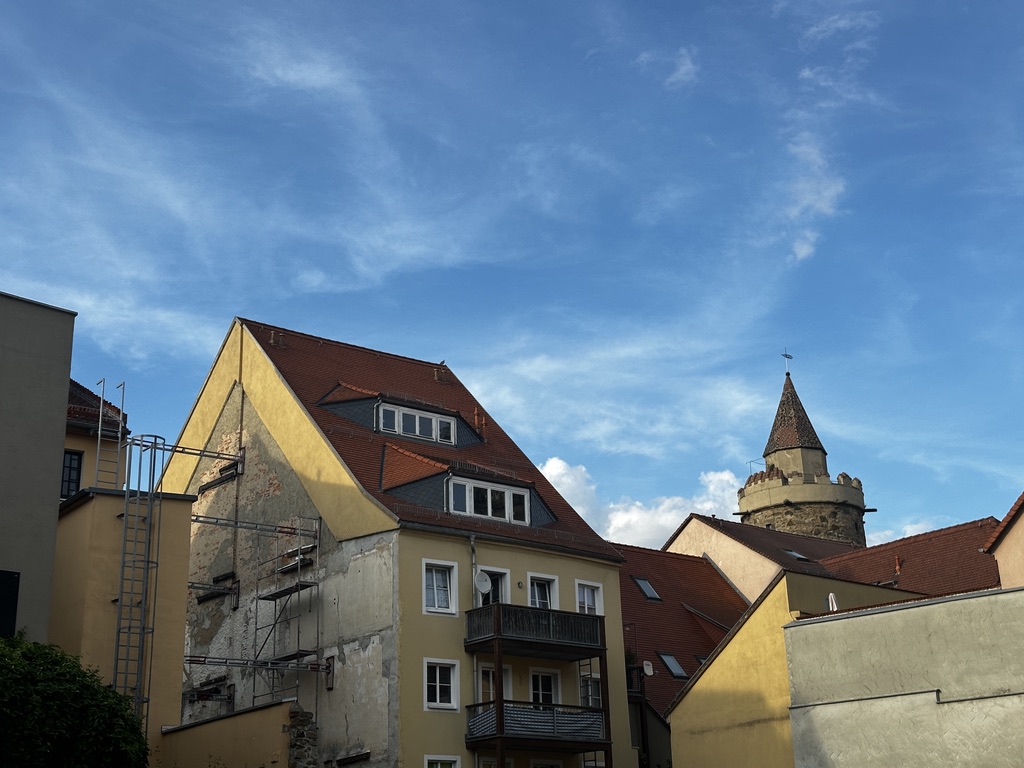
This is the LEANING TOWER OF BAUTZEN... also known as the Reichenturm16, a medieval tower gate built in the 1490s and had its stylistic top built in 1718
The blue and yellow crest at the top is a coat of arms honoring the Habsburg emperor
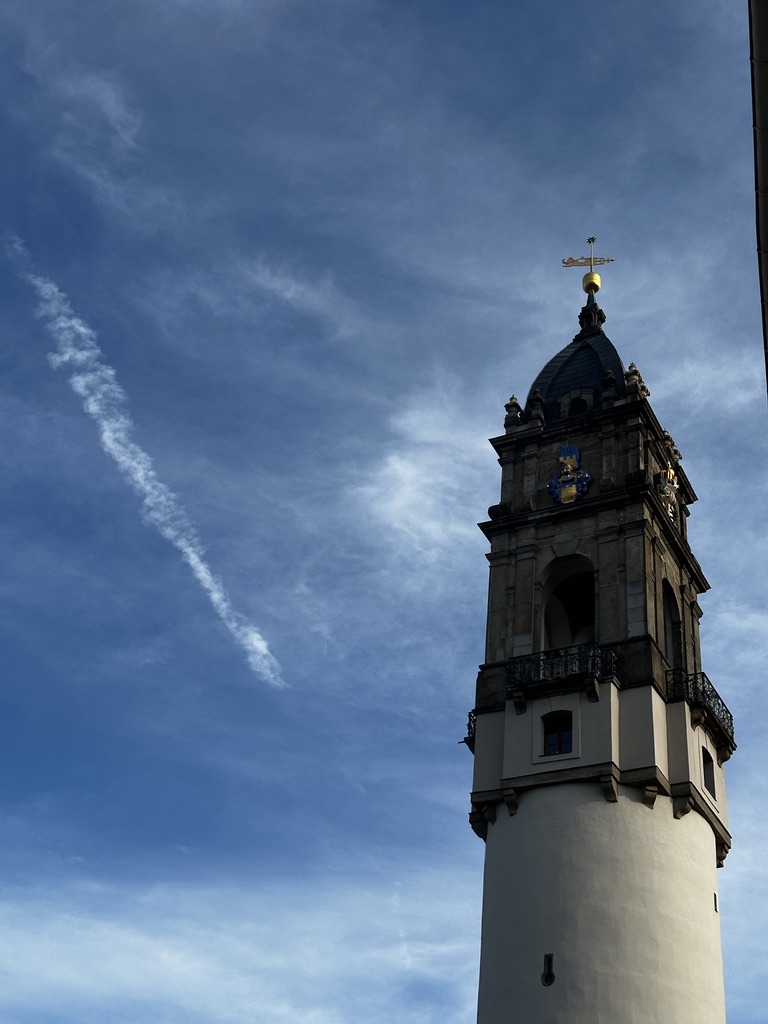
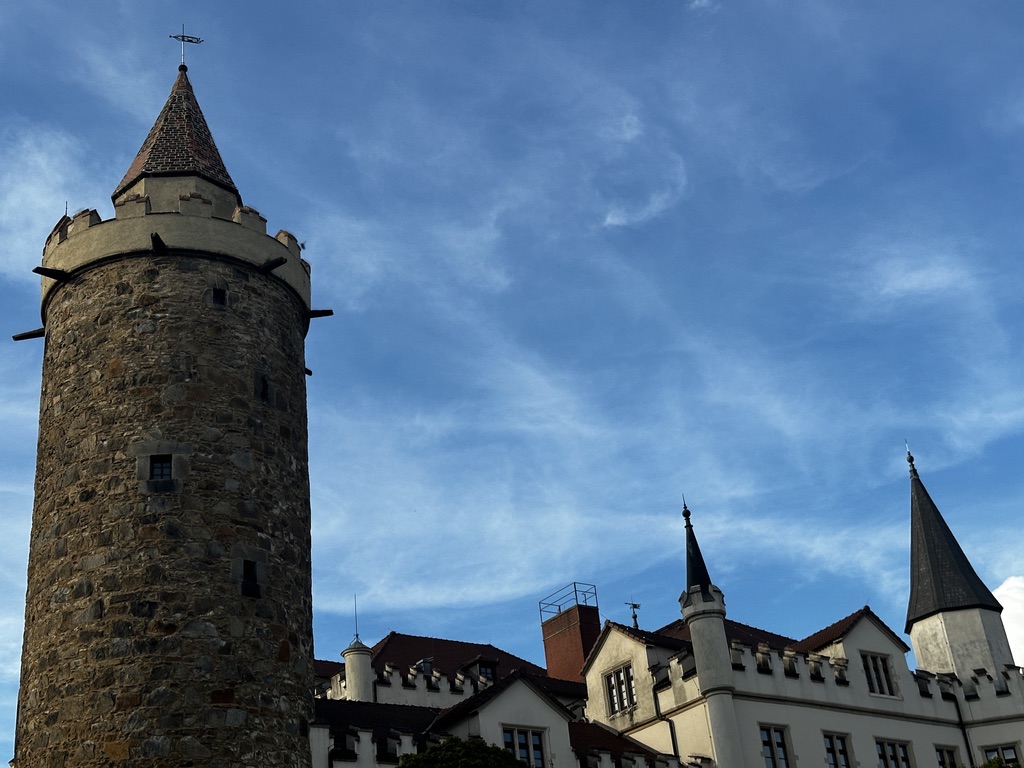
Another picture of the tower from the ramparts and some beautiful architecture in the background, the tower was built in 1490 and is known as the 'Wendish Tower', the building behind it are barracks and it was designed in 1842 by Gottfried Semper17, in English Tudor style
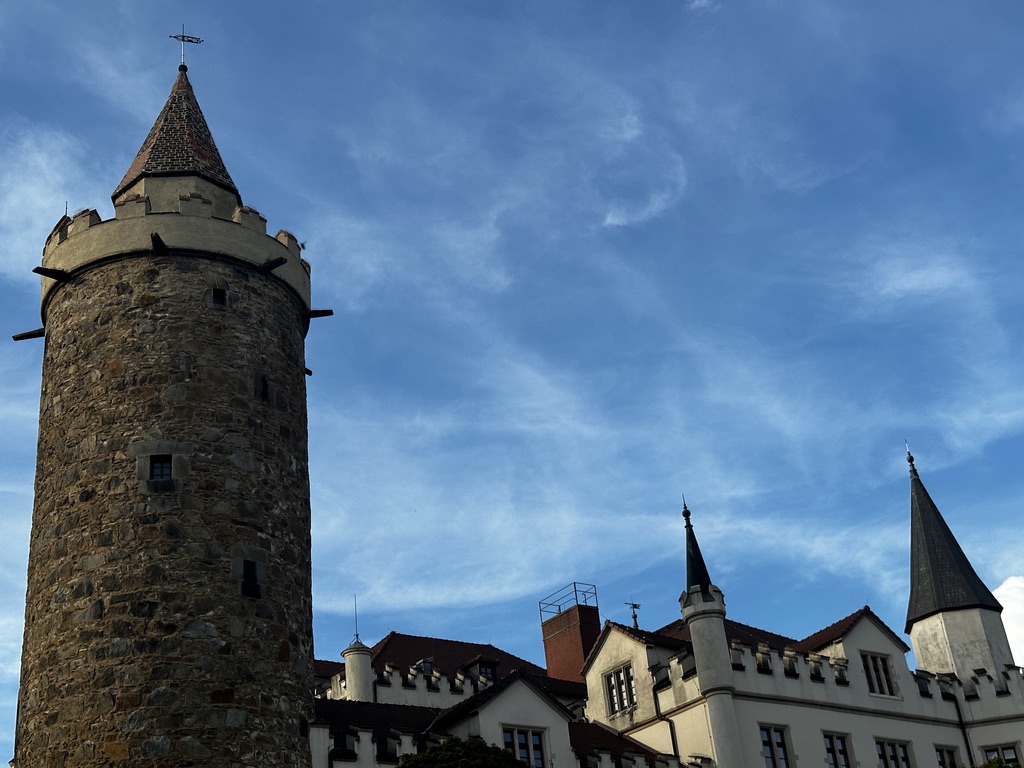
The tower and its name (Wednischer Turm) the Wendish Tower reveal the purpose here, as the Tower guarded the road toward the more ruralish Wendish (Sorbian) settlements
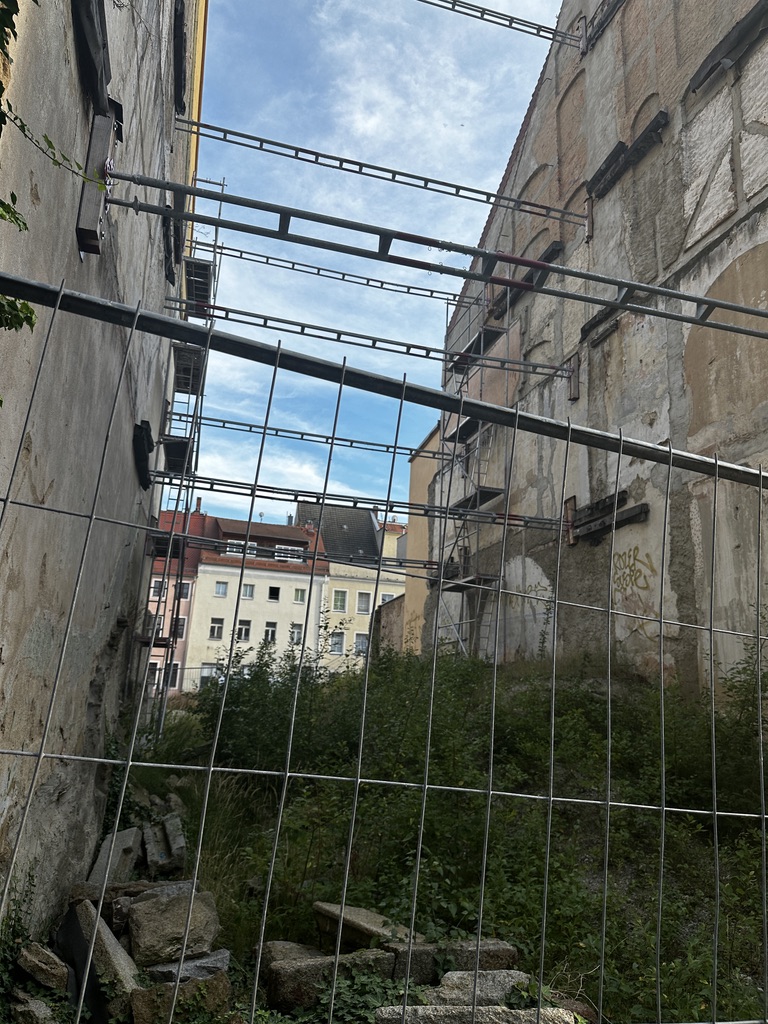
Just a strange picture I took of an abandoned lot, it felt beautiful to me, I just love juxtaposition, how old could those stones be laying like cobble on the ground?
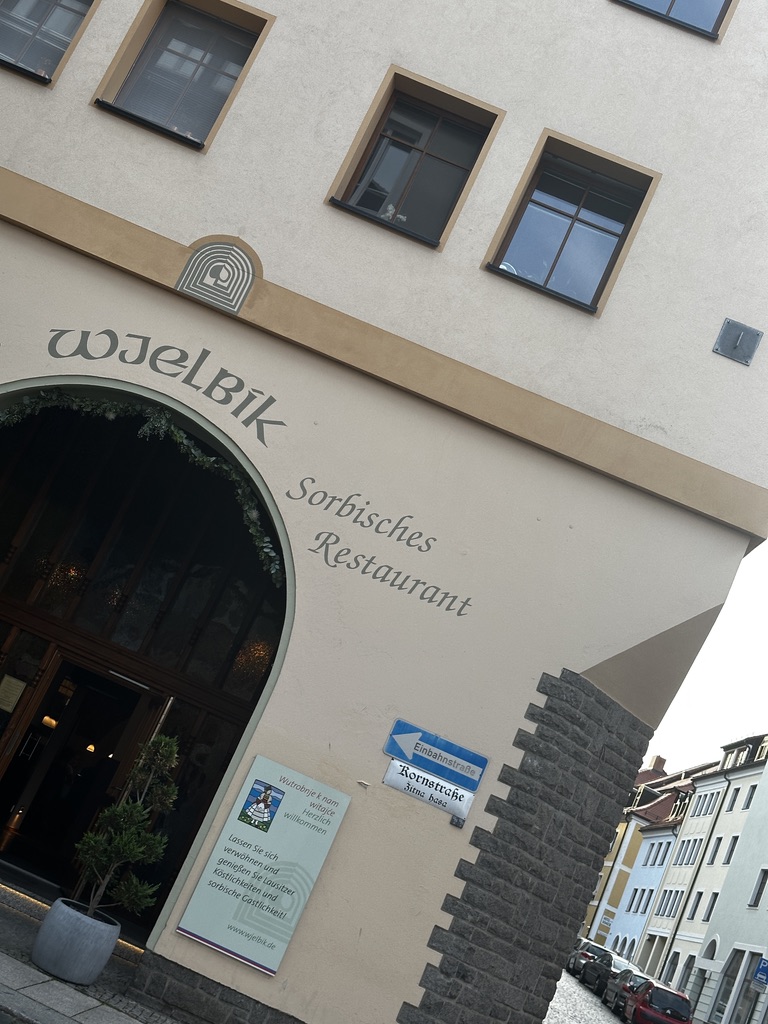
Lady friend and I were getting quite peckish, so we decided to have supper, but why come to a place like this and not engage in the local cuisine? So we picked the only Slavic restaurant in town, Wjelbik18, which seemed to be a tourist destination and felt incredibly... kitsch!
You must excuse me, but I did not take any pictures of the food. You see, we ordered steak, and it was quite good, but it look a long time to come, and I may have had one or two or four aperol spritzers, so the rest of the day I am a wee drunk
As a little fun aside, Wjelbik means 'little vault' in Upper Sorbian19, which is a reference to the vaulted room the restaurant sits within. I wish I had any pictures to show, but boy was I drunk!